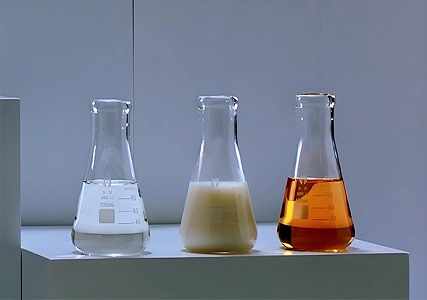
Viscosity reducers, also known as viscosity-decreasing agents, are chemical admixtures that lower the internal resistance (viscosity) of concrete or cementitious mixtures. They are increasingly important in modern concrete technology, especially in high-performance and self-consolidating concrete, because they allow enhanced flow and handling without adding excessive water or compromising strength or durability. ARIT’s ART-VR concrete viscosity reducer is a prime example of a modern high-performance product in this category.
Viscosity reducers are typically made from synthetic polymers, surfactants, or specialty monomers that reduce friction among cement particles and decrease the binding of paste. One example from patent literature describes a viscosity reducer polymerized from 4-hydroxybutyl vinyl ether, unsaturated amide, and unsaturated phosphoric acid ester monomers. The molar ratios are carefully tuned (e.g. 1 : (0.5-3) : (0.01-0.1)) to achieve low dosage effectiveness, sometimes as low as 0.01% to 0.03% by weight of cementitious material. Importantly, this formulation shows significantly lower viscosity while maintaining early and long-term compressive strength. [1]
Other products in the market use polycarboxylate-based polymers combined with surfactants, stabilizers, and sometimes wetting agents. The active ingredients may include polycarboxylate ethers, non-silicone surfactants, or other dispersants. The goal is to reduce yield stress and make mixes easier to pump, pour, or finish. For example, a concrete wetting agent and viscosity reducer product is described as using PCE polymers and surfactants to lower viscosity, enhance workability, reduce water demand, and improve finish. [2]
The physical and chemical parameters often included: molecular weight (often tens of thousands to a few hundred thousand Daltons), pH near neutral (around 5-8), good compatibility with other admixtures (water reducers, retarders), low risk of adverse effects on setting or strength, and stability in storage.
Viscosity reducers are used in a number of concrete-related and non-concrete industries. Key applications include:
High-Performance Concrete (HPC): To achieve high compressive strength, durability, and reduced permeability, while keeping the concrete flowable for placement. Lower water content enabled by viscosity reduction helps reduce porosity and improve durability. The ARIT product is designed for mixes with strength grades exceeding 30 MPa and fine binders (nano-silica or ultrafine cement) for high fluidity and strength.
Self-Consolidating Concrete (SCC): SCC demands fluidity but also cohesion and stability. Viscosity reducers help in reducing stiffness/yield stress so the mix flows freely, but must be balanced so that aggregates don't settle.
Pumped Concrete & Long Joint Pours: For concrete transported via pump or over longer distances, high viscosity can make pumping difficult and slow. Reducers help maintain flow, avoid blockages, and ensure smooth placement.
Overlays, Repairs & Coatings: In overlay systems or repair mortars, reduced viscosity allows better penetration, smoother finishes and better bond with existing substrate. Specialized viscosity reducers are used in coatings as well to improve leveling and reduce brush or spray marks.
Underwater Concrete including Anti-washout Mixes: When placing concrete underwater or in submerged conditions, agents that help maintain viscosity help reduce wash-out of cementitious paste and fines. The concrete remains more cohesive and resists separation.
Manufactured Concrete Elements, Prefab & Beam Yards: These often require precise finishes and handling. Lower viscosity allows better casting, less need for excessive vibration, and more uniform texture and finish.
Using properly formulated viscosity reducers offers benefits:
Improved flowability and workability without adding extra water, so water-cement ratio stays low
Reduced friction in pumping, lower pumping pressures, less energy and labor required
More uniform material distribution; reduced segregation and bleeding
Enhanced finish quality, like surface smoothness, fewer voids, fewer defects
But there are trade-offs and considerations:
Overreduction of viscosity might compromise cohesion; risk of segregation if not balanced with viscosity modifying admixtures (VMAs) or stabilizers
Some reducers may slightly delay setting time or affect early strength if dosage is too high or incompatible with cement/admixtures
Cost: high-performance chemical polymers tend to cost more
Compatibility: must be tested with specific cement types, supplementary cementitious materials, aggregates, admixture mixes
ARIT recommends a dosage of ART-VR at 0.05%-0.10% of binder weight, adjusted based on mix materials and environmental conditions. From the patent example, viscosity reducers of novel composition were effective at very low quantities, around 0.01% to 0.03% of cementitious material, while achieving marked reductions in flow resistance and viscosity. This low dosage helps keep cost down and minimize side effects.
Other commercial products may require higher dosage depending on the formulation, mix design, environmental conditions, water-cement ratio, and desired flow properties. A typical wetting-agent plus viscosity reducer product noted recommended dosage levels of 0.5%-2%, especially in high-solid PCE-based systems, for concrete or mortar use. Ensure proper mixing and timing of addition for the product guidelines from viscosity reducer suppliers.
Field testing and lab trials are critical. Testing involves measuring slump, flow time, or flow-cone time; observing pumping behavior; checking early strength, such as 1-day, 3-day, 7-day strengths, to ensure no significant adverse effect; and checking finish quality and appearance.
Viscosity reducers are powerful tools in modern concrete and coating applications. ARIT’s ART-VR is a strong example of how advanced formulations can deliver reduced plastic viscosity, lower yield stress, improved flow, and better overall concrete performance. When chosen carefully and used in correct dosage, viscosity reducers help achieve improved efficiency, durability, and surface quality without sacrificing structural integrity. By carefully selecting chemical types, dosage, and balancing with other admixtures, they can significantly improve flow, reduce pumping energy, enhance finish, and increase efficiency, all without compromising strength or durability. However, success depends on thorough field testing, quality control, and compliance with safety and environmental norms.
Reference:
[1] https://patents.google.com/patent/CN106008784A/en
[2] https://www.xyzchemical.com/products/xyzchem-concrete-wetting-agent-and-viscosity-reducer-wa-100/
 English
 tiếng việt
 العربية
 বাঙালি
 සිංහල
සිංහල