A High-Range Water Reducer (HRWR), also called a superplasticizer, is an advanced concrete admixture designed to significantly lower the water-to-cement ratio while preserving or improving workability. HRWRs allow concrete mixes to achieve higher strength, better flow, reduced permeability, and improved durability, without sacrificing workability.
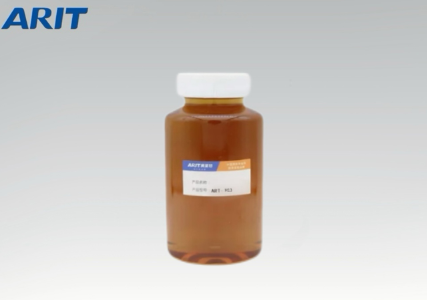
ARIT, a leading manufacturer in concrete admixtures for sale, offers a product line called Water Reducing Type Origin Liquor, which provides origin liquors (semi-finished forms) that can be compounded into finished HRWR products. These origin liquor products include high ratio water reducing type, comprehensive origin liquor, and accelerating versions, which allows for flexible mix design and high performance.
HRWR molecules, especially PCE polycarboxylate ether, and other EPEG/HPEG variants, attach to cement grains, creating electrostatic repulsion and/or steric hindrance. This prevents particles from clumping (flocculation), promoting a more fluid matrix. ARIT's origin liquors like ART-P181 (powdered PCE) and ART-M611 (EPEG-based) are explicitly developed for high dispersion and low dosage.
By allowing cement particles to be more efficiently wetted and dispersed, less water is required to achieve a given level of slump or flow. Some of ARIT's high ratio origin liquors claim water reduction rates exceeding 45-50% under optimal conditions.
Because of better dispersion and stabilized mix chemistry, these HRWRs help concrete maintain its workability for longer durations. This is especially critical for long transport, warm climates, or delayed placement. ARIT origin liquors are said to have little slump loss.
HRWRs work best when compatible with the type of cement, aggregate, and other admixtures present. ARIT's origin liquors are designed to have good compatibility with different cementitious materials and slump retention origin liquors. Also, lower water content often leads to improved compressive strength.
Significant water savings: Reduction in water needed, often over 40-50%, means less cement paste needed for desired strength. This can reduce cracking and permeability.
Higher early and long-term strength: Because concrete is denser and hydration is more efficient, it gains strength more rapidly and maintains higher long-term strength.
Improved workability and flow: Especially useful for concrete that needs to be pumped, placed in dense reinforcement, or self-leveling; better flow helps reduce labor and finishing time.
Reduced shrinkage and better durability: Less water, fewer voids, and better microstructure reduce shrinkage cracks and improve resistance to environmental degradation like freeze-thaw, chemical attack, and carbonation.
More flexible construction scheduling: Longer workable time, less slump loss, ability to maintain quality over transport or delay.
Cost efficiency & sustainability: Using less cement, fewer repairs, lower water usage, and longer structure life all contribute to lower lifecycle costs and less environmental impact.
ARIT products such as ART-M611, ART-M171, ART-P181 illustrate many of these benefits: low dosage, high water reduction, little slump loss, good compatibility with mineral admixtures, and strong strength performance across early and later ages.
In high-strength concrete where you want compressive strength of 60 MPa, 80 MPa or more (C60-C100). ARIT's ART-RD180 is explicitly developed for that class.
For self-consolidating concrete or pumped concrete where flowability and minimal vibration are important.
When slump retention is required, like long haul transport or delayed placement.
In precast concrete or prefab elements where finished appearance, high strength, and reduced cycle time are critical.
In large volume pours or infrastructure such as tunnels, bridges, or highways, where large amounts of concrete are placed and volumetric efficiencies are key.
Under hot weather conditions, to avoid rapid slump loss and premature stiffening.
Mid-Range Water Reducers (MRWRs) are admixtures that reduce water in concrete mixes by about 10–15%, improving workability and finish without drastically changing other properties. [1]
High-Range Water Reducers reduce water by a much greater amount (often 15-40% or more), enabling high flow/slump, greater strength, and more advanced concrete applications.
| Mid-Range Water Reducer | High-Range Water Reducer | |
| Water Reduction Capacity | ~10-15% water reduction | Significantly higher reduction, e.g. 15-30-40% depending on product/dosage |
| Effect on Workability/Slump | Improves workability moderately; allows somewhat higher slump with less additional water. Typically used for conventional slump concrete or flatwork. | Greatly increases flow/slump; allows very fluid or highly workable mixes that are often needed for complex forms, dense reinforcement, SCC, or pumping. |
| Dosage | Moderate dosage; to achieve desired reduction without overplasticizing. Often more forgiving. | Usually lower dosage per weight of cement for larger effect; sensitive to overdosage, can cause segregation, bleeding, or set delay |
| Effect on Setting Time/Slump Retention | Less impact on setting time; slump may drop gradually; better for mixes where finish time or early strength are still important. | Potentially larger impact on setting time; slump loss can be an issue unless admixture is designed for good retention; Type G superplasticizers may also retard set. [2] |
| Cost | Generally less expensive than high-range products; cost per cubic yard is lower since performance demands are lower. | More expensive; higher performance (strength, slump, durability) often justifies the cost in demanding applications. [3] |
| Applications | Slabs, sidewalks, driveways, flatwork, where moderate workability and good finish matter, but high flow or extreme strength not required. | Precast beams, high-rise, tunnel linings, pumped concrete, self-consolidating concrete (SCC), or any structure requiring both high strength and good flow. |
High-Range Water Reducers are a key component in modern, high-performance concrete design. They allow dramatic water savings, better strength, durability, and workability. ARIT's Water Reducing Type Origin Liquor product line delivers real examples of how HRWRs can be applied: high ratio origin liquors, accelerating types, and comprehensive blends suited for various concrete needs. When properly selected, dosed, and tested, HRWRs contribute to stronger, longer-lasting, more efficient concrete solutions.
It enables large reductions in water content while keeping or improving workability. It disperses cement particles, reduces friction and internal resistance, improves early strength, reduces permeability, enhances finish, and helps maintain slump over time.
Yes, in most cases. Superplasticizer is a term commonly used interchangeably with high-range water reducer. Standards like ASTM classify HRWRs under superplasticizer types.
Normal water reducers/plasticizers: reduce water ~5-10%, moderate workability improvement.
Mid-range water reducers: bridge between normal and HRWR; reduce water ~10-15%, better performance than basic plasticizers.
High-Range Water Reducers (HRWR)/Superplasticizers: large water reductions (12-30% or more), strong dispersion, used in high-performance, flowable, high strength or precast concrete.
Reference:
[1] https://usa.sika.com/en/construction/concrete/concrete-admixtures/water-reduction/mid-range-water-reducer.html
[2] https://www.concretenetwork.com/concrete/concrete_admixtures/types.html
[3] https://www.hpmcmanufacturer.com/high-range-vs-mid-range-water-reducers-key-differences/
 English
 tiếng việt
 العربية
 বাঙালি
 සිංහල
සිංහල