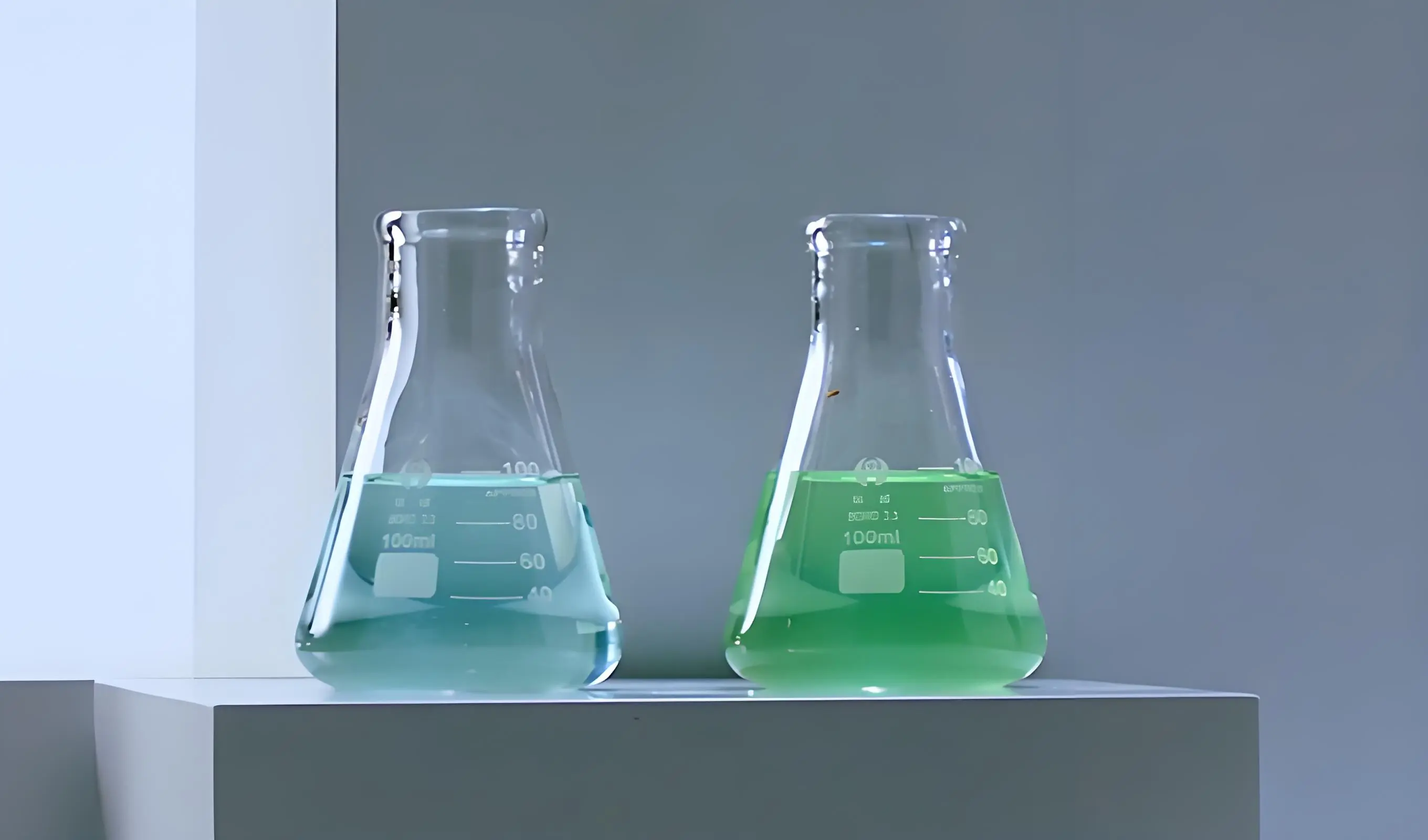
Modern concrete technology places increasing emphasis on durability, environmental compliance, early strength development, and long-term performance. Among the range of chemical admixtures available, low alkali and alkali-free admixtures have emerged as critical solutions for many demanding applications, particularly in structural concretes where traditional alkaline accelerators can cause durability issues. These admixtures include accelerators and flash-setting agents tailored to minimize alkaline content while achieving rapid setting or strength benefits.
Low alkali and alkali-free admixtures are chemical additives formulated with minimal or no alkaline compounds that traditionally accelerate concrete setting or enhance early strength. The alkaline content in conventional accelerators, typically sodium or potassium compounds, can lead to undesirable side effects such as alkali–aggregate reaction (AAR), efflorescence, or reinforcement corrosion if not carefully controlled. In contrast, low alkali and alkali-free formulations reduce these risks by using alternative chemistries. [1]
Laboratory research, such as studies into fluorine-free and alkali-free liquid accelerators, has shown that such materials can shorten setting times dramatically while also promoting early strength without the negative effects of high alkalinity. For example, a fluorine-free and alkali-free liquid accelerator reduced initial and final setting times to just a few minutes and increased early compressive strength by more than 35% compared to concrete without the accelerator. [2]
Concrete containing high levels of alkali is at risk of alkali–aggregate reactions, where alkali ions react with reactive silica in aggregates to form expansive gels that crack and weaken concrete over time. By minimizing alkali, alkali-free systems help diminish this risk, thereby improving long-term durability.
Alkali-free accelerators are less corrosive to embedded steel reinforcement and less likely to introduce harmful ions that compromise concrete integrity. This is particularly important for structures like bridges, tunnels, and marine environments.
Traditional alkaline accelerators can be caustic, irritating to workers, and environmentally unfriendly. Alkali-free products are often non-toxic, non-corrosive, and safer to handle, contributing to better jobsite safety and sustainability.
Low alkali and alkali-free admixtures are widely used in shotcrete (sprayed concrete) and rapid-hardening concrete applications where early strength is essential but alkaline accelerators are undesirable. They balance quick set times with improved performance.
Unlike traditional accelerators that increase the pH of concrete mixes with strong alkaline ions such as Na⁺ or K⁺, low alkali and alkali-free admixtures use alternative compounds that promote hydration and early strength without raising alkalinity. These mechanisms include:
Chemical activation of hydration reactions, especially C₃A and C₃S phases.
Promotion of ettringite formation and crystal growth, which accelerates solid network formation in early stages.
Enhanced nucleation sites, which help hydration products develop quicker even under low alkali conditions.
By avoiding strong alkaline activators, these admixtures can accelerate concrete setting and strength gain while maintaining low overall pH, aiding compatibility with other mixture components, like mineral admixtures and superplasticizers.
ARIT, a leading concrete admixture company with a strong reputation in rapid-setting and early-strength–enhancing technologies, offers several products in the alkali-free and low alkali category.
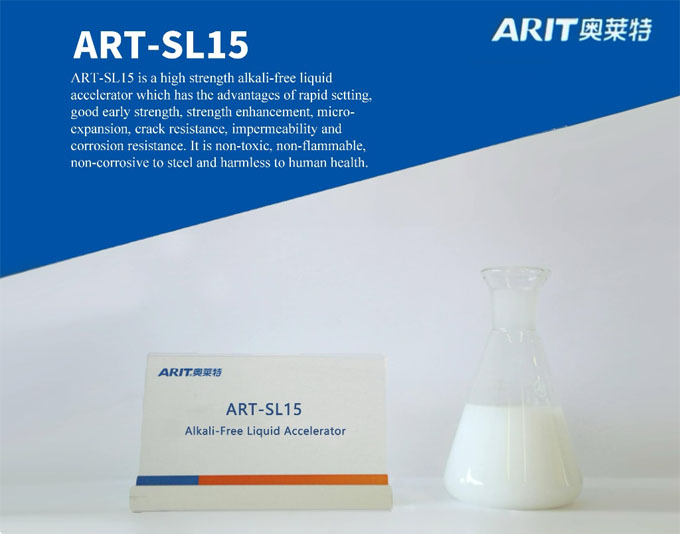
ARIT’s alkali-free liquid flash setting admixture, represented by products like ART-SL15, provides fast setting and high early strength without alkaline substances and with low chloride content, ensuring there is no negative impact on durability or steel corrosion. It is environmentally friendly and suitable for sprayed applications requiring rapid hardening and low powder rebound.
Another ARIT product, the ART-SL37 low alkali liquid flash setting admixture, accelerates concrete setting while minimizing alkali content to reduce efflorescence and mitigate alkali-related reactions. This product also improves workability, enhances durability, reduces shrinkage, and is compatible with other concrete additives.
Beyond flash setting, ARIT’s ART-SL15 Alkali Free Accelerator is designed as a high-performance shotcrete accelerator with remarkable early strength, micro-expansion (crack resistance), impermeability, and corrosion resistance. It has very low alkali content (≤1%) and low chloride content (≤0.1%), making it safe, green, and harmless in production use.
ARIT also supplies powdered alkali-free solutions like ART-HQ310 and ART-HQ330, which are convenient, cost-effective alternatives to liquid products. These powdered admixtures dissolve quickly, offer excellent anti-freeze performance, and maintain alkali content ≤1%, making them especially useful in cold weather and shotcrete environments where liquid admixtures struggle with freeze resistance.
Alkali-free products enhance early compressive strengths and show high strength retention ratios, proving that rapid early strength does not compromise long-term performance.
Flash setting admixtures, particularly alkali-free ones, reduce rebound in shotcrete applications, lowering material loss and cost.
Low alkali content reduces the risk of harmful reactions during the life of the concrete, such as AAR and efflorescence, thereby extending service life and reducing lifecycle costs.
Non alkaline admixtures are non-toxic, have little odor, do not cause corrosion, and improve worker safety and environmental compliance.
Shotcrete and Sprayed Concrete: where rapid set, low rebound, and durable lining are essential, like tunnels, underground works.
Rapid Repair and Maintenance: in bridges, seawalls, and infrastructure requiring fast return to service.
Cold Weather Construction: powdered alkali-free products help overcome freeze problems.
Durability-Sensitive Structures: where alkali-aggregate reaction and reinforcement corrosion must be minimized.
Low alkali and alkali-free admixtures represent a vital advancement in concrete admixture technology. They address the limitations of traditional alkaline accelerators by delivering rapid setting and early strength while enhancing durability, reducing corrosion risk, and improving sustainability. ARIT’s range of alkali free and low alkali admixtures, including liquid and powdered flash setting agents and alkali-free accelerators, offers practical, high-performance solutions for modern construction projects that demand fast turnaround without compromising quality or long-term durability. With their low environmental impact and broad compatibility with other admixtures, these products are ideal components of next-generation concrete systems.
Reference:
[1] https://admixture-concrete.com/concrete-admixture/concrete-accelerator/
[2] https://www.techscience.com/jrm/v9n11/42804
 English
 tiếng việt
 العربية
 বাঙালি
 සිංහල
සිංහල