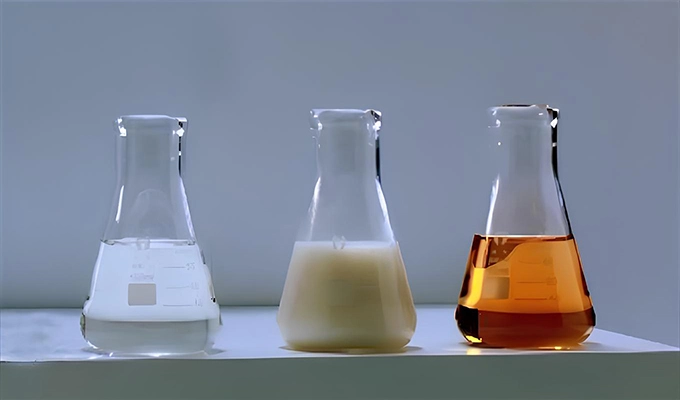
In modern construction, the workability of concrete plays a pivotal role in determining both construction efficiency and structural integrity. Especially under challenging conditions such as high temperatures, complex structural designs, or long-distance transport, maintaining concrete flowability becomes critical to project success. In this context, the combined use of concrete water reducer and slump retention in concrete has emerged as a key approach to enhancing the overall performance of concrete. This article explores their synergy and value in real-world engineering applications.
A concrete water reducer is a chemical admixture designed to significantly reduce the amount of mixing water required without compromising the flowability of the concrete. It works by dispersing cement particles and reducing the thickness of the water film formed during the early stages of cement hydration, which effectively lowers the water-to-cement ratio and enhances both strength and density.
Key advantages include:
Improved early and long-term compressive strength.
Enhanced pumpability and workability.
Reduced cement consumption for better cost-efficiency and lower carbon footprint.
Increased resistance to water penetration, freeze-thaw cycles, and chemical attack.
Slump retention in concrete refers to the ability of freshly mixed concrete to maintain its original flowability over time. This property is essential for applications involving long haul distances, mass placements, or hot weather concreting.
Achieving slump retention typically requires the use of slump retention agents. These additives function by delaying the re-agglomeration and flocculation of cement particles, thereby stabilizing the workability of the mix. Although such admixtures have limited impact on compressive strength, they are vital for extending the workable time and improving the overall quality of placement.
In practice, using a concrete water reducer alone can improve initial flowability but may not sustain it, particularly in high-temperature environments or during long-distance pumping. This often results in rapid slump loss. To address this, combining a concrete water reducer with a slump-retaining admixture offers a "fast-acting, long-lasting" solution.
The synergy is reflected in several ways:
Initial Workability Boost: The water reducer provides excellent early flow, facilitating mixing, transportation, and initial placement.
Extended Performance Window: Slump retention components slow down the rheological degradation of concrete, supporting continuous, efficient work on-site.
Balanced Strength and Constructability: The blend ensures that structural strength is preserved while meeting the demands of real-world construction handling.
Adaptability to Complex Conditions: Effective in hot climates, traffic-delayed delivery, or large-volume continuous casting scenarios.
In today's pursuit of high-quality, sustainable, and efficient construction, the combined application of concrete water reducer and slump retention in concrete is becoming a standard strategy in concrete technology. This dual approach not only optimizes the construction performance of concrete but also improves overall project quality and durability. As the industry advances toward smart construction and low-carbon building practices, this synergy lays a solid foundation for future-ready infrastructure.
 English
 tiếng việt
 العربية
 বাঙালি
 සිංහල
සිංහල