Whether you are managing a large infrastructure project or pouring a residential slab, knowing what affects how long concrete retains its desired properties, including workability and strength, is essential for planning, placement, curing, and long-term performance.
In concrete technology, retention time refers to how long a desirable characteristic of fresh concrete, such as workability or slump, remains at a level suitable for placing, transporting, pumping, or finishing before it becomes too stiff or loses its performance characteristics.
This is closely related to slump retention, which describes how long freshly mixed concrete maintains its initial slump or workability over time, rather than stiffening quickly after mixing. Slump retention in concrete is measured from the time of initial mixing to the time the concrete loses its workable consistency and becomes difficult to place.
A clear understanding of slump retention and retention time is key for ensuring that concrete remains workable long enough to be placed and finished properly, without needing excessive re-mixing or adding extra water, which can compromise strength and durability.
Retention time affects several critical aspects of concrete construction:
If concrete loses workability too quickly, it becomes difficult to pump, place, or compact, leading to non-uniformity, voids, or segregation.
Proper workability duration ensures the water–cement ratio is maintained, which helps achieve design compressive strength.
Concrete that stiffens prematurely can result in poor surface finish and increased difficulty in achieving smoothness or texture.
Predictable retention time allows better planning of batching, transportation, and on-site placement, reducing rework and delays.
To improve and control concrete retention time in practice, slump retention admixtures are often used. These admixtures help slow down the loss of slump, keeping the concrete workable for longer during transport and placement without adding extra water.
Electrostatic repulsion: dispersing cement particles and preventing them from flocculating and stiffening the mix.
Steric hindrance: long-chain molecules create physical barriers between cement particles to maintain flowability.
Hydration control: slowing the early stages of cement hydration to delay stiffening without significantly affecting long-term strength.
This means slump retention admixtures help maintain workable concrete over extended periods, enabling better placement, pumping, and finishing — all while preserving the water–cement ratio that governs strength and durability.
Several factors influence how long concrete retains its properties before stiffening or curing. Understanding these helps engineers and contractors plan mix designs and site procedures appropriately.
The types and proportions of cement, aggregates, water, mineral admixtures, and chemical additives all play a major role:
Water–cement ratio: higher water content increases workability but reduces strength and can shorten retention time if the mix segregates or bleeds.
Supplementary cementitious materials: like fly ash or slag can change hydration rates, often delaying initial set and affecting slump retention.
Ambient temperature has a large influence on concrete retention: high temperatures accelerate hydration, causing concrete to set faster and diminishing retention time; low temperatures slow hydration and extend setting and curing time, but if too cold, hydration may drastically slow or stop altogether.
Humidity determines how quickly surface moisture evaporates: low humidity accelerates moisture loss, which can lead to rapid stiffening and reduced retention time; high humidity slows evaporation, preserving workability longer and enhancing curing.
Thicker sections of concrete trap heat generated during hydration, which can accelerate internal reactions and potentially shorten workable time. Conversely, thin sections may lose moisture quickly on the surface, affecting retention.
Slump retention admixture: extends the workable period of fresh concrete without harming strength or durability.
Retarders: slow down the setting process, further extending retention time, useful in hot climates or long haul transports.
Accelerators: speed up early strength but reduce retention time if not carefully balanced.
Although concrete curing and strength development is a long process, here’s a common timeline under typical conditions without extraordinary additives: [1]
| Stage | Typical Time after Pouring |
| Initial set (hardening begins) | 1–6 hours |
| Walk-on strength | 24–48 hours |
| Partial strength (approx. 70%) | ~7 days |
| Full design strength (structural capacity) | ~28 days |
Retention time for workability, however, is much shorter, often measured in the first 30 to 60 minutes after mixing, which is critical for placing and finishing. Without specialized admixtures, workability can decline rapidly during this window.
To ensure concrete stays workable long enough for project needs, slump retention admixtures are widely applied. ARIT’s product line includes Slump Retention Type Origin Liquor, a concentrated admixture designed to maintain slump for extended periods without sacrificing concrete performance.
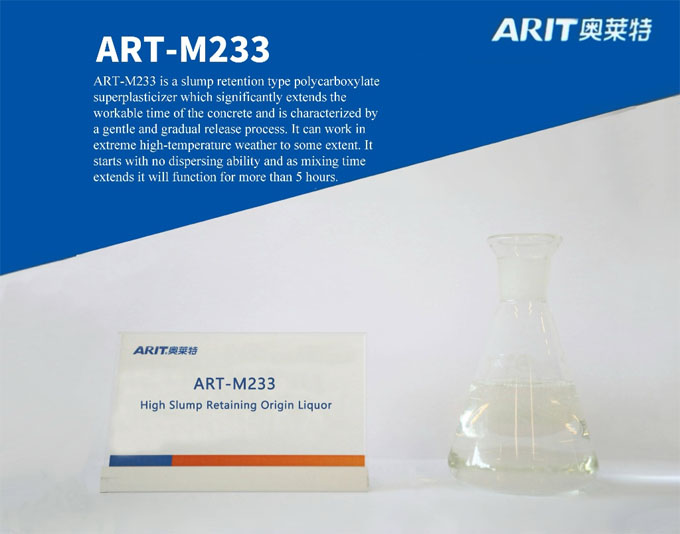
Keeps fresh concrete workable longer without adding extra water.
Helps maintain uniform flowability during transport, pumping, and placement.
Supports proper compaction and formwork filling, enhancing concrete density and durability.
Reduces construction risk due to slump loss, boosting scheduling reliability.
By integrating slump retention admixtures, contractors can reliably adjust the retention time of concrete to match transportation distances, site conditions, and complex placements without resorting to harmful water addition or re-mixing.
High temperatures accelerate hydration, reducing workable time and increasing risk of early stiffening. Good moisture management, such as covering, fogging, and using retarders or slump retention admixtures, is essential to prevent cracks and ensure uniform curing. [2]
In cold conditions, hydration slows down and retention time extends, but too slow hydration can delay strength gain. Heated curing or accelerators may be needed to prevent freeze damage and ensure proper strength development.
Here are practical methods used in construction to control and improve concrete retention time:
Products like ARIT’s slump retention admixtures help maintain consistent workability over time, improving placement and compaction quality.
Use shading, cooling water, or timed placement in cooler parts of the day to slow down hydration in hot weather.
Modify water–cement ratio, cement type, or use mineral admixtures to balance workability and retention time.
Apply curing compounds or wet coverings to keep moisture in the slab surface, essential for both retention time of workability and long-term strength.
Coordinate batching, transport, and placement to minimize dead time between mixing and finishing.
Retention time of concrete plays a critical role in construction quality and efficiency. Multiple factors influence this retention time, including mix design, temperature, moisture, and chemical admixtures.
Using slump retention admixtures such as ARIT’s Slump Retention Type Origin Liquor provides a practical and effective way to extend concrete workability without compromising strength or durability. With thoughtful planning, mix design optimization, and retention time control, construction teams can meet project timelines, ensure better placement quality, and achieve stronger, more durable concrete structures.
Reference:
[1] https://wotaichem.com/how-long-does-concrete-take-to-cure/
[2] https://www.crmca.com/wp-content/uploads/2022/06/Driver_Study_Guide_Module_01.pdf
 English
 tiếng việt
 العربية
 বাঙালি
 සිංහල
සිංහල