Water reducing admixtures are essential components in modern concrete technology. They allow engineers to reduce mixing water while maintaining workability, significantly improving strength, durability, and long-term performance.
These admixtures are widely used in ready-mix concrete, precast production, pumped concrete, and high-performance infrastructure projects worldwide.
Water reducing admixtures are chemical compounds designed to improve cement particle dispersion and reduce water demand in concrete mixtures.
They are often referred to as plasticizers or dispersing agents in concrete technology.
They break down cement particle clusters (flocculation), allowing water to interact more efficiently with cement grains.
Increased compressive strength
Improved durability
Reduced permeability
Better workability
Lower cement consumption
Improved pumpability
These benefits make water reducing admixtures one of the most important categories in modern concrete chemistry.
Water reducing admixtures are widely used in:
Ready-mix concrete production
Precast concrete manufacturing
Pumped concrete systems
High-rise building structures
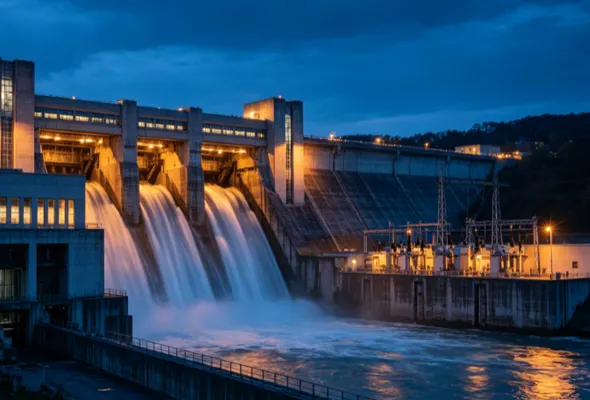
Infrastructure such as bridges, tunnels, and dams
An increase in concrete strength is primarily achieved by reducing the water-cement ratio, which leads to a denser cement matrix and lower porosity.
Engineering references on concrete properties confirm that lower water content improves compressive strength, reduces permeability, and enhances durability in hardened concrete systems
Cement particles naturally clump together, trapping water inside flocs. This reduces hydration efficiency.
Water reducing agents:
Break cement clusters
Release trapped water
Improve particle distribution
Increase hydration efficiency
Traditional water reducers use charged molecules that create repulsion between cement particles.
Modern high-performance systems use polycarboxylate ether (PCE) polymers that:
Create molecular spacing
Prevent re-agglomeration
Maintain long-term dispersion stability
· Lower water demand
· Improved slump flow
· Denser hardened concrete
· More uniform hydration
Strength improvement is mainly achieved by reducing the water-cement ratio.
Lower water-cement ratio = higher compressive strength
Water reducing admixtures increase strength by:
Reducing excess mixing water
Improving cement particle packing density
Enhancing hydration efficiency
Reducing capillary pore formation
Increasing matrix compactness
Lower water content results in:
Fewer pores
Denser cement paste
Stronger aggregate bonding
Higher compressive strength
Better abrasion resistance
Improved freeze-thaw durability
Reduced shrinkage cracking
Enhanced chemical resistance
Lignosulfonate-based systems
Moderate water reduction (5%–10%)
General construction use
15%–40% water reduction
High flowability
Used in high-strength concrete
Advanced PCE-based formulations
Used in self-compacting concrete (SCC)
Suitable for ultra-high-performance concrete (UHPC)
Combines water reduction and setting delay
Ideal for hot weather concreting
Improves early strength development
Used in cold weather construction
Different construction needs require different formulations.
Easy to mix
Stable dispersion
Used in ready-mix plants
Longer shelf life
Convenient transport
Used in dry mix systems
ARIT provides both liquid and powder water reducing systems for global construction markets.
Admixture Type | Function | Strength Effect | Workability | Typical Application |
Water Reducing Admixture | Reduce water demand | High increase | Improved | General construction |
Superplasticizer (PCE) | High dispersion & flow | Very high increase | Excellent | UHPC / SCC |
Retarding Admixture | Delay setting time | Neutral | Extended working time | Hot weather concreting |
Accelerating Admixture | Speed up hydration | Early strength gain | Slight reduction | Cold weather / precast |
Air-Entraining Agent | Freeze-thaw resistance | Durability improvement | Slight reduction | Roads & bridges |
Waterproofing Admixture | Reduce permeability | Durability improvement | Neutral | Underground structures |
Water reducing admixtures improve concrete flow without increasing water content.
Easier pumping over long distances
Better surface finishing
Reduced segregation and bleeding
Improved slump retention
Stable batching performance
Typical mix optimization:
Cement: 400 kg
Water reduced from 200L → 160L
PCE-based superplasticizer added
Same slump achieved
Higher compressive strength
Lower permeability
Improved durability
This demonstrates how performance increases without adding cement, supporting sustainable construction.
Typical dosage ranges:
Normal water reducer: 0.2%–0.5%
High range water reducer: 0.5%–2.0%
PCE systems: optimized based on slump and flow requirements
Proper dosage control is essential because:
Overdosing may cause segregation or retardation
Underdosing reduces dispersion efficiency
Water reducing admixtures are supplied by industrial concrete solution providers(/).
Consistent product quality
Technical laboratory support
Cement compatibility testing
·On-site technical service capability
Water reducing admixtures are widely used in modern infrastructure because they enable more efficient concrete design and improve long-term structural performance.
The Institution of Civil Engineers(https://www.ice.org.uk/) highlights the importance of advanced material technologies, including chemical admixtures, in improving durability and sustainability of modern infrastructure system.
Water reducing systems enable:
High-performance structural design
Reduced cement consumption
Sustainable material usage
Improved durability and lifespan
Lower maintenance costs
They are widely used in bridges, tunnels, airports, marine structures, and skyscrapers.
A chemical additive that reduces water demand while maintaining concrete workability.
By lowering the water-cement ratio and improving concrete microstructure density.
Advanced superplasticizers capable of achieving up to 40% water reduction.
Yes, they are essential for high-performance and durable concrete systems.
No, they improve cement efficiency but do not replace it.
 English
 tiếng việt
 العربية
 বাঙালি
 සිංහල
සිංහල