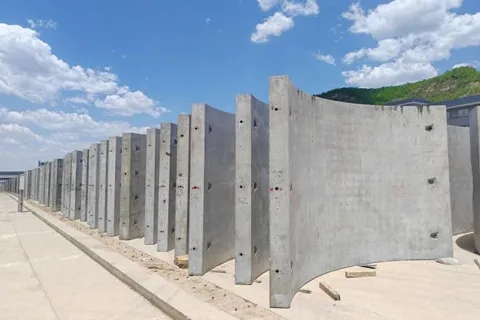
Concrete curing plays a critical role in determining the strength, durability, and long-term performance of concrete structures. In modern construction projects, contractors often need concrete to gain strength faster so that formwork can be removed earlier, precast elements can be demolded sooner, and project schedules can be accelerated.
One of the most effective ways to achieve faster strength development is through the use of a chemical admixture for concrete. Modern admixture technologies can significantly reduce setting time, increase early-age strength, and improve overall construction efficiency.
This guide explains how to accelerate concrete curing, when to add admixtures in concrete, how long concrete takes to cure with accelerators, and what the main admixtures used in concrete are.
Concrete curing is the process of maintaining adequate moisture, temperature, and time conditions so that cement hydration can continue and concrete can achieve its designed properties.
When water reacts with cement, a chemical process known as hydration occurs. This process produces the compounds responsible for concrete strength.
Proper curing helps:
· Increase compressive strength
· Improve durability
· Reduce shrinkage cracking
· Lower permeability
· Enhance abrasion resistance
· Extend service life
According to the National Ready Mixed Concrete Association (NRMCA), proper curing is one of the most important factors influencing concrete quality and durability.
In many construction applications, waiting for conventional curing can slow project progress.
Accelerated curing helps contractors:
· Remove formwork sooner
· Increase precast production cycles
· Reduce labor costs
· Improve winter concreting performance
· Open roads and bridges faster
· Meet aggressive construction schedules
Projects such as tunnels, railways, airports, precast concrete plants, and infrastructure developments frequently rely on accelerated strength gain technologies.
Several methods can be used to speed up hydration and early strength development.
Accelerating admixtures are specifically designed to increase the rate of cement hydration.
Benefits include:
· Faster setting
· Higher early strength
· Shorter curing periods
· Earlier formwork removal
Accelerators are widely used in:
· Precast concrete production
· Fast-track construction
· Cold-weather concreting
· Repair projects
A concrete quick setting admixture significantly reduces the initial setting time of concrete.
These admixtures are commonly used in:
· Tunnel shotcrete
· Underground construction
· Mining applications
· Emergency repairs
Unlike standard accelerators that primarily increase strength development, quick-setting admixtures focus on reducing setting time.
Hydration reactions occur more rapidly at higher temperatures.
Methods include:
· Heated mixing water
· Heated aggregates
· Insulated formwork
· Steam curing systems
However, temperature must be carefully controlled to avoid excessive shrinkage and thermal cracking.
Steam curing is commonly used in precast concrete factories.
Advantages include:
· Accelerated hydration
· Faster strength development
· Improved production efficiency
· Shorter mold turnaround times
Steam curing is often combined with accelerator admixtures to maximize performance.
Concrete mixes designed for rapid strength gain typically include:
· Lower water-cement ratios
· High-performance cement
· Superplasticizers
· Accelerating admixtures
Proper mix design can significantly reduce curing time while maintaining long-term durability.
The effectiveness of a concrete admixture depends not only on the product itself but also on when it is introduced into the mixing process.
Mixing Stage | Material |
Stage 1 | Aggregates |
Stage 2 | Cement |
Stage 3 | Most of the mixing water |
Stage 4 | Admixture |
Stage 5 | Final water adjustment and mixing |
Most admixtures are added during batching or mixing to ensure uniform distribution throughout the concrete.
Incorrect addition can lead to:
· Reduced performance
· Inconsistent workability
· Delayed strength gain
· Segregation issues
· Poor slump retention
The Portland Cement Association (PCA) recommends verifying admixture compatibility and dosage through trial batches before production.
The answer depends on:
· Cement type
· Ambient temperature
· Water-cement ratio
· Admixture dosage
· Mix design
However, accelerating admixtures can dramatically shorten strength development times.
Time After Placement | Conventional Concrete | Concrete with Accelerator |
8 Hours | 5–10 MPa | 15–25 MPa |
24 Hours | 10–20 MPa | 25–40 MPa |
3 Days | 20–35 MPa | 40–55 MPa |
7 Days | 30–45 MPa | 50–65 MPa |
In many applications, accelerated concrete can achieve stripping strength within 12–24 hours.
Research published by RILEM demonstrates that modern accelerator technologies can significantly improve early-age strength development while maintaining long-term performance.
Modern concrete technology relies on several categories of admixtures to improve workability, control setting time, accelerate strength development, enhance durability, and reduce permeability.
The table below summarizes the most commonly used concrete admixtures in today's construction industry.
Admixture Type | Primary Function | Typical Dosage | Common Applications |
Water Reducer | Reduce water demand while maintaining workability | 0.2%–1.0% | Ready-mix concrete |
Superplasticizer (PCE) | High-range water reduction and flowability | 0.1%–2.0% | High-strength concrete |
Accelerating Admixture | Increase hydration rate and early strength | 1%–5% | Precast concrete |
Quick Setting Admixture | Reduce setting time rapidly | 3%–8% | Tunnel shotcrete |
Retarding Admixture | Delay setting time | 0.1%–0.5% | Hot-weather concreting |
Air Entraining Agent | Improve freeze-thaw resistance | 0.01%–0.1% | Roads and bridges |
Waterproofing Admixture | Reduce water penetration | 0.5%–2.0% | Basements and tunnels |
Defoamer | Eliminate excess air bubbles | 0.01%–0.3% | Architectural concrete |
Water reducers lower the water-cement ratio without sacrificing workability.
Benefits include:
· Higher compressive strength
· Lower permeability
· Improved durability
· Better finishing quality
They are among the most widely used chemical admixtures in concrete.
Polycarboxylate Ether (PCE) superplasticizers provide superior water reduction and slump retention.
Applications include:
· High-performance concrete
· Self-compacting concrete
· High-rise construction
· Precast concrete
According to the Federal Highway Administration (FHWA), advanced water-reducing technologies play an important role in producing durable and sustainable concrete.
Accelerators increase hydration speed and promote rapid strength development.
Typical applications include:
· Cold-weather concreting
· Fast-track construction
· Precast manufacturing
· Infrastructure repair
These admixtures help reduce curing times and improve project efficiency.
Quick setting admixtures are designed to shorten the initial setting time of concrete.
They are commonly used in:
· Tunnel construction
· Shotcrete operations
· Underground engineering
· Mining projects
These products help concrete stiffen and stabilize much faster than conventional mixtures.
Retarders delay hydration and extend working time.
Advantages include:
· Better placement flexibility
· Reduced risk of cold joints
· Improved performance in hot climates
They are particularly useful for large concrete pours and long transportation distances.
Waterproofing admixtures reduce permeability and improve resistance to water penetration.
Common applications include:
· Basements
· Water tanks
· Tunnels
· Marine structures
· Underground facilities
Waterproofing admixtures contribute significantly to long-term durability and corrosion protection.
Air-entraining admixtures create microscopic air voids throughout the concrete matrix.
Benefits include:
· Improved freeze-thaw resistance
· Better resistance to deicing chemicals
· Enhanced durability in cold climates
These admixtures are commonly used in highways, airport pavements, and bridge decks.
Defoamers eliminate excessive air bubbles generated during mixing.
Benefits include:
· Smoother concrete surfaces
· Improved density
· Better strength development
· Reduced surface defects
They are especially valuable in architectural and high-performance concrete applications.
The role of admixtures in concrete extends far beyond setting time control.
Modern admixtures help achieve:
Concrete becomes easier to mix, pump, place, and finish.
Accelerators reduce waiting times and improve construction productivity.
Specialized admixtures improve resistance to aggressive environmental conditions.
Water-reducing admixtures help lower water-cement ratios without sacrificing performance.
Improved efficiency often results in lower cement consumption and reduced environmental impact.
As a result, admixtures have become essential components in nearly all modern concrete mixes.
Choosing the appropriate admixture depends on several factors.
Questions to evaluate include:
· Is rapid strength gain required?
· Does the project involve cold-weather concreting?
· Is waterproofing necessary?
· Will the concrete be exposed to freeze-thaw cycles?
· Is long slump retention important?
Compatibility should always be tested with:
· Cement type
· Fly ash
· Slag
· Silica fume
· Other admixtures
Reliable concrete admixture suppliers can provide:
· Technical support
· Laboratory testing
· Mix design optimization
· Application recommendations
Selecting the right admixture and dosage is critical to achieving consistent performance.
Concrete curing can be accelerated using accelerating admixtures, quick-setting admixtures, steam curing, heated materials, and optimized mix designs.
Using a high-performance accelerating admixture combined with proper curing practices is one of the most effective methods for improving early-age strength.
Most admixtures are added during batching or mixing to ensure uniform distribution throughout the concrete mixture.
Concrete with accelerators can often reach stripping strength within 12–24 hours, depending on temperature, dosage, and mix design.
The most common admixtures include water reducers, superplasticizers, accelerators, quick-setting admixtures, retarders, waterproofing admixtures, air-entraining agents, and defoamers.
Modern accelerating admixtures are designed to improve early strength while maintaining long-term durability when used according to manufacturer recommendations.
Accelerators primarily increase the rate of strength development, while quick-setting admixtures mainly reduce the initial and final setting times of concrete.
 English
 tiếng việt
 العربية
 বাঙালি
 සිංහල
සිංහල