Concrete is a carefully balanced system of cement, water, aggregates, and supplementary materials. However, basic ingredients alone cannot always provide the workability, setting behavior, strength, or durability required for modern construction. This is why chemical admixtures have become an important part of concrete technology.
So, why use admixture in concrete? The primary reason is to modify concrete performance without fundamentally changing the basic mix design. Depending on the formulation, an admixture can reduce water demand, improve flow, control setting, stabilize air, modify viscosity, or support high-performance concrete.
According to the Federal Highway Administration (FHWA), chemical admixtures can be used to modify both fresh and hardened concrete properties, with water-reducing, air-entraining, and setting-control products among the major categories.
Admixtures allow concrete producers to solve performance problems that cannot be addressed efficiently by simply adding more cement or water.
One of the most important functions of an admixture is to improve workability while controlling water content. A water reducing agent can disperse cement particles so that less mixing water is needed to achieve a target consistency.
This creates one of the major advantages of superplasticizer technology: concrete can become more fluid while maintaining a relatively low water-to-cementitious-material ratio.
FHWA reports that conventional water reducers can typically reduce water demand by around 5–10%, while high-range water reducers can achieve substantially greater reductions depending on the formulation and concrete mixture.
Different projects require different setting characteristics. A quick setting cement admixture may be useful when rapid strength development or shortened construction time is required, while other formulations can delay setting when concrete must remain workable during transportation or placement.
Not every concrete problem concerns water reduction. A viscosity modifying agent can improve cohesion and help reduce segregation or excessive bleeding, particularly in highly flowable mixtures.
A cement defoamer, meanwhile, can help control unwanted air generated by certain admixture systems. This becomes particularly relevant with PCE-based formulations, where air-control characteristics need to be carefully managed.
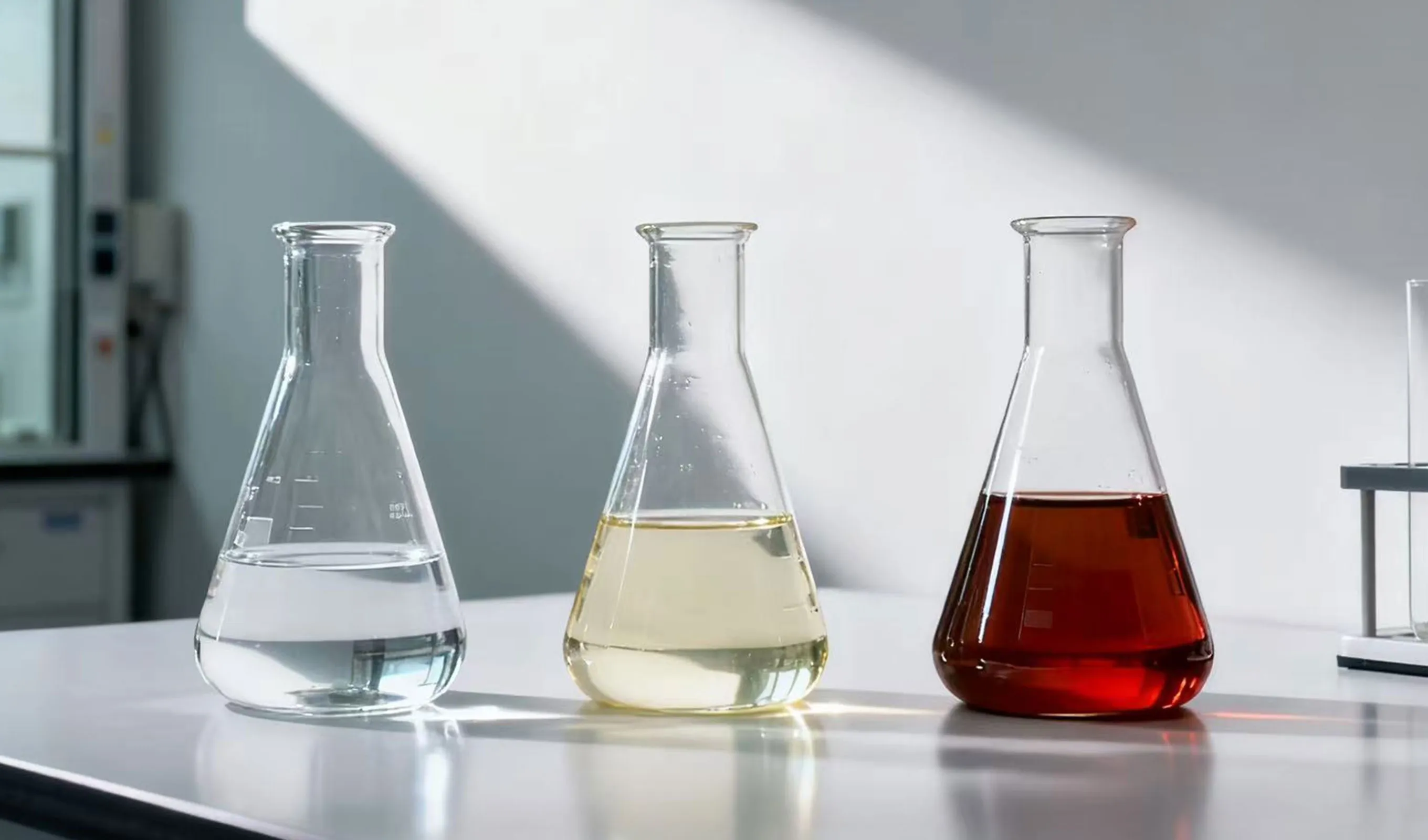
The working mechanism depends on the chemistry of the admixture. Among modern products, PCE polycarboxylate ether technology is particularly important for high-performance concrete.
When cement and water are mixed, cement particles tend to form agglomerations. Water trapped within these clusters is not used efficiently for lubrication or hydration.
A PCE molecule adsorbs onto the surface of cement particles. Its molecular structure then creates repulsive and steric effects that separate the particles. As the agglomerates break apart, more water becomes available around individual cement particles.
This is the fundamental mechanism behind the use of superplasticizer in concrete.
FHWA explains that polycarboxylate-based water reducers use long molecular side chains to produce steric hindrance, helping maintain particle separation even as electrostatic repulsion decreases.
The effectiveness of PCE cement systems is particularly valuable when concrete requires high flow at a low water-to-cementitious-material ratio.
This can support applications such as high-strength concrete, precast products, pumping concrete, and self-consolidating concrete. The American Cement Association notes that high-strength concrete commonly relies on chemical admixtures, including superplasticizers, to maintain workability at low water-cement ratios.
The following table summarizes common functions:
Admixture Type | Main Mechanism | Typical Purpose |
Water-reducing admixture | Cement particle dispersion | Lower water demand |
High performance water reducer | Strong dispersion and steric effects | High flow and low w/cm |
PCE superplasticizer | Steric hindrance and dispersion | High workability and water reduction |
Retarding admixture | Slows hydration-related reactions | Extend working time |
Accelerating admixture | Promotes early hydration | Faster setting and early strength |
Viscosity modifying agent | Changes rheological behavior | Improve cohesion |
Defoamer | Controls unwanted foam/air | Stabilize air content |
ASTM C494/C494M categorizes chemical admixtures according to their principal performance, including water-reducing, accelerating, retarding, high-range water-reducing, and other specific-performance admixtures.
Correct addition is just as important as selecting the right chemistry. Even a high-quality admixture may perform poorly if it is incorrectly stored, diluted, batched, or introduced into the mixture.
Before addition, confirm the manufacturer's technical documentation. Check the recommended dosage basis, density, solids content, compatibility requirements, storage conditions, and mixing procedure.
This is especially important when working with PCE polycarboxylate ether, because products with different molecular structures can behave differently with the same cement system.
Use calibrated dosing equipment rather than estimating manually. Liquid admixtures should be measured according to the manufacturer's specified method.
For large-scale concrete production, automated dispensing systems provide better consistency and reduce the risk of batch-to-batch variation.
The correct addition sequence depends on the admixture and concrete formulation. In many systems, the admixture is introduced with the mixing water or during the mixing process rather than being added directly to dry cement.
For example, FHWA guidance for certain field repair applications specifies particular addition sequences for accelerating admixtures, illustrating why the manufacturer's instructions and project-specific procedure should be followed rather than using one universal sequence.
After adding the admixture, check slump or slump flow, air content, temperature, setting behavior, and visual stability. If the concrete becomes excessively fluid, sticky, aerated, or unstable, the formulation may require adjustment.
ASTM testing procedures emphasize evaluating admixtures with the actual cement, aggregates, pozzolans, and mixture proportions intended for the project because admixture performance can vary with the surrounding materials.
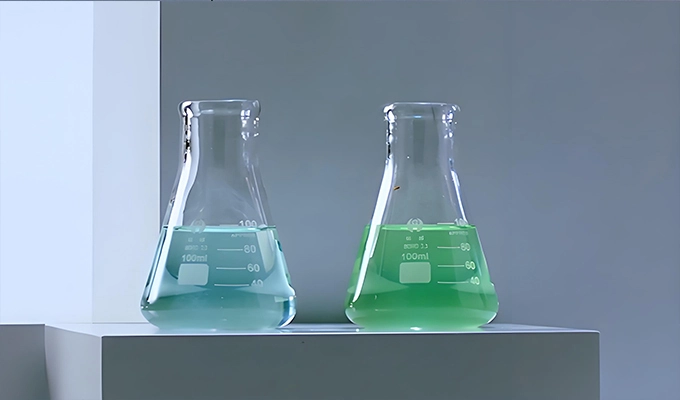
Choosing an admixture company should involve more than comparing product prices. A reliable supplier should be able to provide technical documentation, consistent product quality, application guidance, compatibility information, and support for trial batching.
For producers seeking concrete additives manufacturers, ARIT offers admixture technologies for applications where workability, water reduction, rheology, setting control, and concrete performance must be carefully balanced.
The appropriate solution may involve a PCE-based high performance water reducer, a viscosity modifying agent, a defoaming component, or another specialized formulation. The best choice depends on the concrete's target performance rather than simply selecting the strongest admixture available.
A superplasticizer disperses cement particles, improving concrete flow without requiring a proportional increase in mixing water. This can help produce highly workable concrete at a lower water-to-cementitious-material ratio.
A water reducing agent can maintain required workability with less mixing water. This can improve cement efficiency and potentially contribute to higher strength and lower permeability.
Common water reducing admixture types include conventional water reducers, mid-range water reducers, and high-range water reducers or superplasticizers. PCE technology is widely used in modern high-range products.
A viscosity modifying agent helps control the rheological behavior of concrete. It can improve cohesion and reduce segregation in highly flowable mixtures.
Not necessarily, but admixture selection should consider the complete cementitious system. Low alkali cement, supplementary cementitious materials, and admixture chemistry can interact, so compatibility testing is recommended for demanding applications.
Admixtures are used in concrete because they provide a practical way to control performance beyond what cement, water, and aggregates can achieve alone. Modern water reducers and PCE systems can improve flow while limiting water demand, while accelerators, retarders, viscosity modifiers, and defoamers address other performance requirements.
Understanding how admixture works in concrete and how to add admixture in concrete helps producers achieve more consistent results. With the right formulation, testing, and dosing procedure, admixture technology can support more workable, durable, and high-performance concrete.
This is the first one.
 English
 tiếng việt
 العربية
 বাঙালি
 සිංහල
සිංහල