Name
Wenzhou Oujiang Bridge C70 Project
Pic.Wenzhou Oujiang Bridge
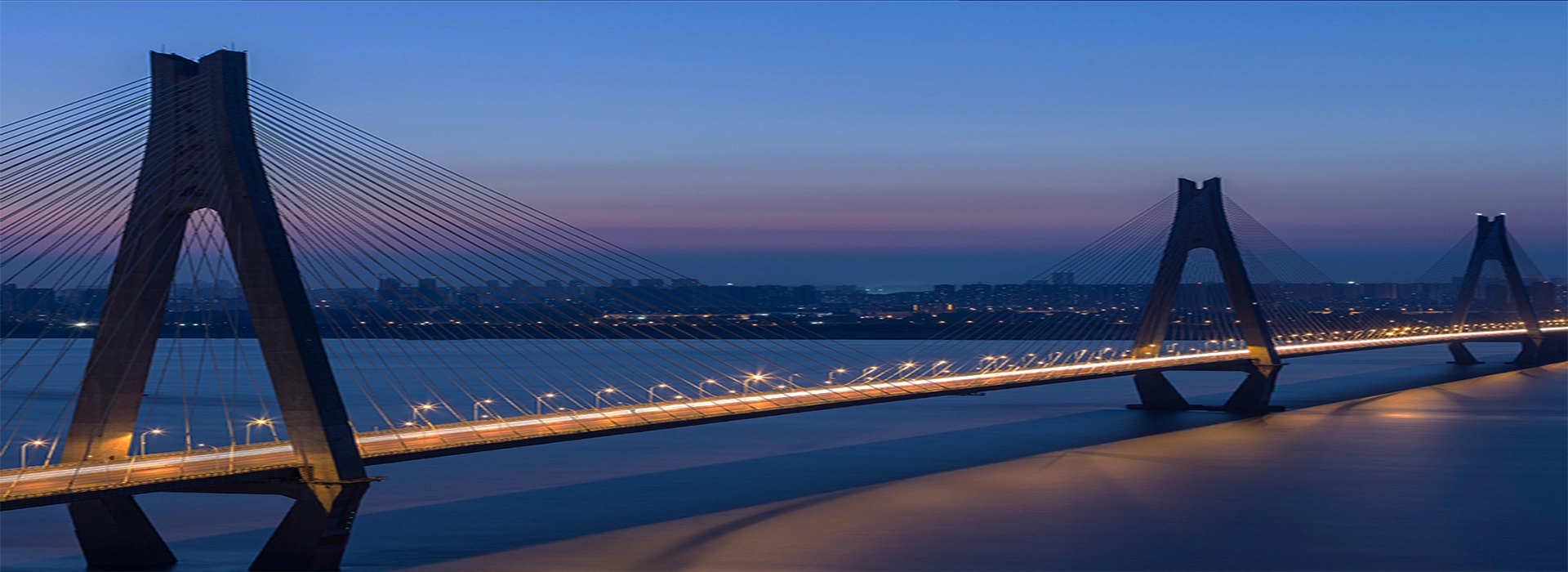
The Wenzhou Oujiang Bridge is situated near Beibaixiang Town, Yueqing City, crossing the northern estuary of the Oujiang River and landing on Lingkun Island. It lies in a macro-tidal coastal area near the estuary of the Oujiang River. Geographically, the bridge site is approximately 1.6 km west of the Panshi Power Plant Wharf, 1.4 km east of Qili Operation Area Container Terminal, 7.5 km downstream from the Oujiang North Estuary Bridge of Yongtaiwen Expressway Re-route, and about 9 km north of the long-term planned runway of Longwan Airport. This location satisfies navigation clearance requirements, avoids core operation zones of major port terminals, and complies with aviation obstacle-limitation constraints.
This four-track cable-stayed bridge has an overall length of 1415.1 m. Located on the main navigation channel of the northern Oujiang estuary, it adopts a steel-box composite-girder cable-stayed bridge with span arrangement of (100+256+700+256+100) m. It is designed as a road-rail combined bridge with road and railway decks at the same elevation, accommodating four railway tracks (Wenfu High-Speed Railway + Hangwen Connecting Line) and a six-lane highway (Liubai-Longwan Expressway). A longitudinal elastic restraint system is implemented, with intermediate-pass H-shaped C70 high-performance concrete pylons whose maximum height reaches 215.5 m.
The northern estuary of the Oujiang River features typical macro-tidal estuary characteristics with complex and variable hydrological conditions, including large tidal range, high tidal current velocity and complicated flow directions. Subject to the combined effects of upstream runoff and offshore ocean tides, water level varies substantially, imposing stringent requirements on anti-scouring capacity and collision resistance of bridge foundations.
(1)The main pylons adopt H-shaped concrete structures. Given its special configuration, construction environment and material properties, concrete pumpability faces far more stringent requirements than those for conventional bridge pylons. Concrete pumpability refers to a comprehensive performance indicator describing the capacity of concrete to flow smoothly through delivery pipelines under pressure and maintain homogeneity and compaction at placement locations. It mainly depends on concrete flowability, cohesiveness, water retention and segregation resistance. The demanding pumpability for pylon construction stems from superimposed complexities of structural design, construction technology, environmental conditions and material characteristics rather than any single factor.
(2)The main pylons are located downstream of the Oujiang River close to the estuary, within a typical offshore environment. Corrosive agents such as seawater, chloride ions, sulfate and carbon dioxide exist in the offshore setting, together with combined natural effects of tides, wave action, sea breeze and temperature fluctuation. These factors may cause severe corrosion damage to concrete and reinforcing steel of main pylons and impair structural durability and long-term service performance. As critical load-bearing components for high-speed railway bridges, pylons are designed for a 100-year service life. Accordingly, addressing offshore durability risks and securing favorable long-term structural performance constitutes one of the core construction challenges for main pylons of the new Wenfu High-Speed Railway Oujiang Extra-Large Bridge. Offshore durability threats to pylon structures are mainly manifested in chloride ion ingress, sulfate attack, freeze-thaw damage and marine atmospheric corrosion.
(3)To satisfy stringent high-speed railway operation requirements, main pylons are constructed with high-strength high-binder-content concrete. Such concrete delivers advantages including high strength, high compactness and superior load-bearing capacity to meet structural force demands of pylons, yet it inherently suffers high cracking susceptibility. Concrete cracks seriously compromise pylon durability and load-bearing capacity. Particularly under offshore exposure, cracks act as penetration pathways for corrosive media such as seawater and chloride ions, accelerating structural corrosion and endangering bridge operational safety. Therefore, crack control for high-strength high-binder-content concrete represents another core construction difficulty. The high cracking risk originates from superimposed shrinkage deformations including thermal shrinkage caused by hydration heat, drying shrinkage and plastic shrinkage, together with thermal stress and restraint stress generated during construction, as well as material characteristics, construction methodology and ambient conditions.
Five core technical research priorities have been defined for this project: optimizing raw-material selection to establish a solid foundation; resolving pumping difficulties for high-viscosity concrete under ultra-high lifting height; developing anti-cracking and crack-control solutions for high-strength concrete; establishing a durability prediction model for marine environments; and innovating construction technologies for pylon fair-faced concrete. A full-chain technical system integrating material performance, construction execution, durability assurance and appearance quality control has been established, supporting safe, durable and high-quality construction of bridge pylons.
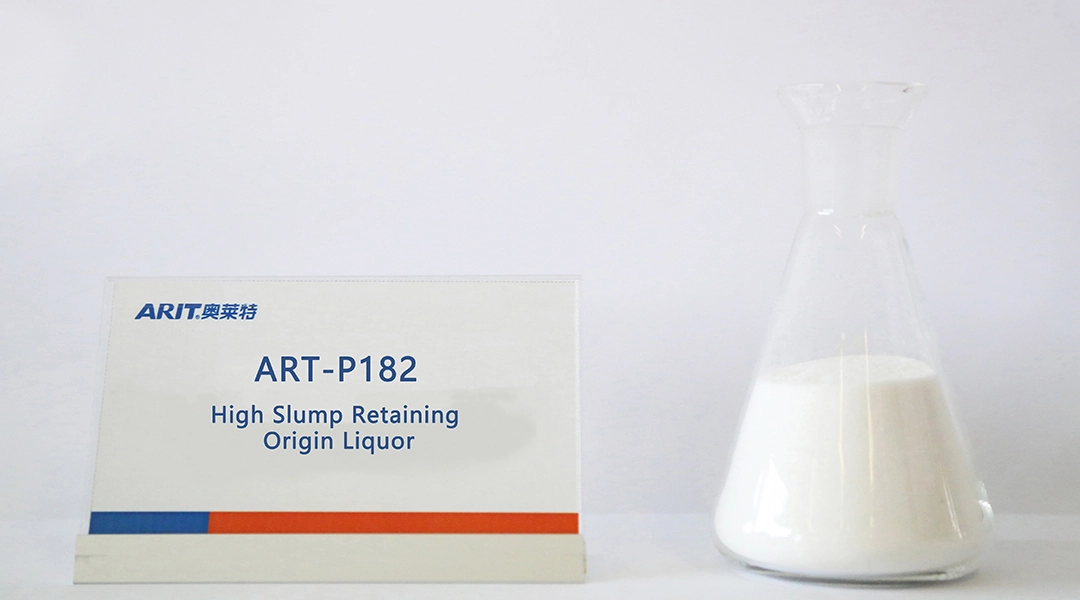
ART-M611C、ART-M15 and ART- M22
For detailed remixing formula, feel free to contact the technicians at ARIT.
Address
22 Huixin Road, Nanjing, China
Call us
Email us
Connect with ARIT for Premium Concrete Additives Wholesale

 English
 tiếng việt
 العربية
 বাঙালি
 සිංහල
සිංහල