Modern concrete is often expected to combine high flowability with excellent stability. This becomes particularly challenging when concrete contains a low water-to-binder ratio, high-range water reducer, limited fine material, or must travel through a complex pumping system. In these situations, simply increasing fluidity may create another problem: segregation, bleeding, or poor aggregate suspension.
This is where Viscosity Modifying Admixture become valuable.
A viscosity modifying admixture, commonly abbreviated as VMA, is designed to modify the rheological behavior of fresh concrete. Rather than primarily increasing water reduction, a VMA helps improve cohesion and stability by controlling the movement of water and solid particles within the mixture. FHWA describes viscosity-modifying admixtures as materials that can increase cohesion and viscosity, helping reduce segregation and bleeding in highly workable concrete.
For concrete producers looking for more consistent fresh-concrete behavior, choosing the right Viscosity Modifying Admixture(https://www.arit.com) can therefore be an important part of mix optimization.
Viscosity Modifying Admixture are chemical admixtures used to increase the cohesion and viscosity of fresh concrete without relying on additional cement or mixing water.
Their primary purpose is not simply to make concrete “thicker.” Instead, they help establish a better balance between fluidity and stability.
A highly fluid concrete mixture needs enough mobility to flow around reinforcement, through formwork, or along pumping lines. At the same time, the mixture must retain sufficient cohesion to keep aggregate particles suspended and prevent excessive movement of free water.
ACI describes viscosity-modifying admixtures as chemical admixtures that enhance mixture viscosity and thereby reduce aggregate segregation, settlement, and bleeding.
This makes VMAs particularly useful in concrete mixtures where conventional adjustments to water content or paste volume would not provide an efficient solution.
The effect of a VMA can be understood through two important fresh-concrete properties:
Plastic viscosity
Yield stress
Plastic viscosity describes the resistance of concrete to flow once movement has started, while yield stress relates to the force required to initiate flow.
A properly selected VMA can modify these properties and help produce concrete that remains cohesive at rest while still being workable under mixing, pumping, vibration, or placement.
Recent ACI research has specifically examined the interaction between viscosity-modifying admixtures and polycarboxylate superplasticizers, showing that their combined use can influence yield stress and plastic viscosity.
The main reason to use viscosity modifiers in concrete is to solve a stability problem without sacrificing the required workability.
A concrete mixture may have adequate slump or slump flow but still be unstable. For example, excessive free water can migrate toward the surface, while coarse aggregate can settle or separate from the mortar. During pumping, transportation, and placement, these effects can become more pronounced.
A VMA can help address this imbalance.
Segregation occurs when different components of fresh concrete separate instead of moving as a relatively uniform mixture.
This is especially undesirable for highly flowable concrete because a mixture that looks easy to place may not maintain uniformity during transportation or placement.
VMA technology increases cohesion and can help keep aggregate particles suspended within the cementitious matrix.
Bleeding occurs when water migrates upward through fresh concrete.
Excessive bleeding can affect surface quality and create inconsistencies within the concrete. FHWA notes that VMAs bind some free water, increasing cohesiveness and viscosity and helping control segregation and bleeding.
Pumpability is not simply a question of whether concrete has enough slump.
Concrete must also maintain appropriate cohesion while passing through pipelines. A mixture that is too unstable may experience segregation, while one that is excessively viscous can require greater pumping pressure.
The objective is therefore to achieve a controlled rheological balance.
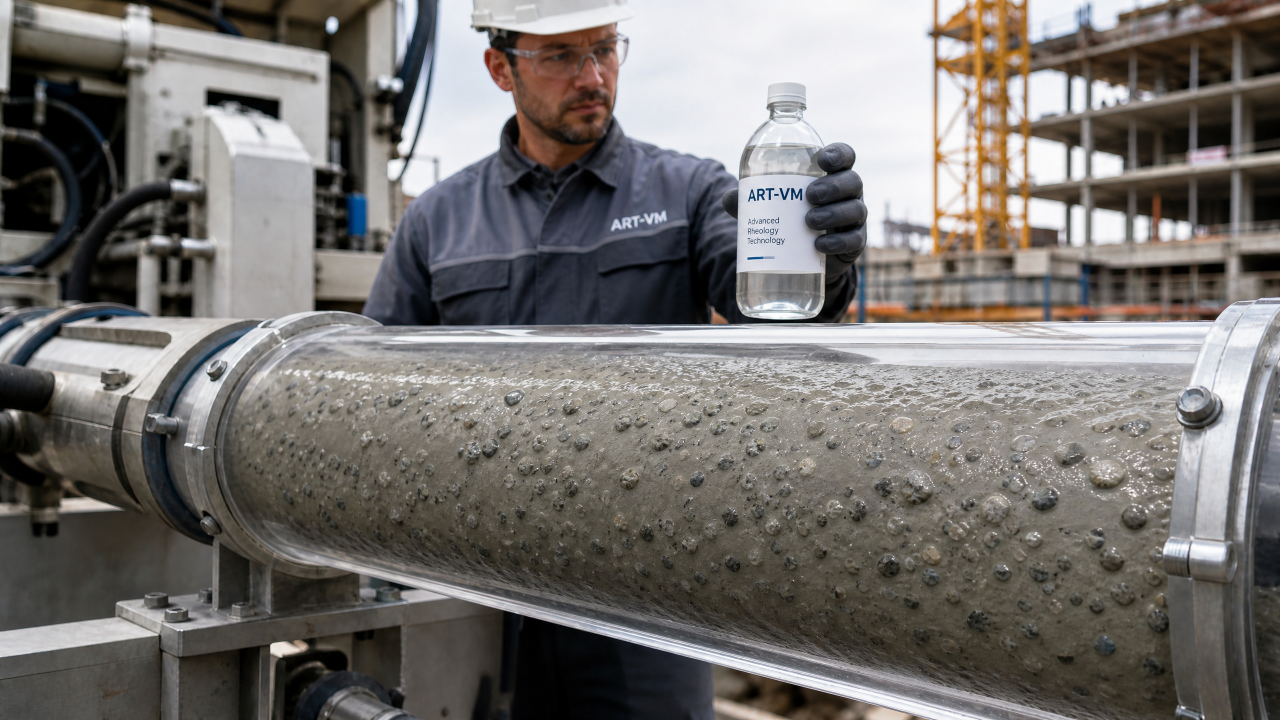
ART-VM for Pumped Concrete
One of the most important applications of a viscosity modifying Admixture is its combination with a high-range water reducer.
These two admixture technologies perform different but complementary functions.
A high-range water reducer primarily helps produce high workability with reduced water demand. A VMA, meanwhile, helps improve cohesion and stability.
The combination can therefore be useful when concrete needs to be both highly flowable and resistant to segregation.
Research published through ACI has investigated VMA and polycarboxylate superplasticizer combinations and found that competitive adsorption between admixtures can influence rheological behavior.
This is why admixture selection should not be based on individual product performance alone. The interaction between the VMA, water reducer, cement, supplementary cementitious materials, aggregates, and mixing sequence also needs to be considered.
A VMA that performs well in one concrete mixture may behave differently in another.
Important variables include:
Cement chemistry
Water-to-binder ratio
Fine aggregate content
Aggregate grading
Supplementary cementitious materials
Water-reducing admixture type
Mixing sequence
Concrete temperature
Target slump or slump flow
For this reason, laboratory trials and trial batches are preferable to selecting a dosage based solely on a general product recommendation.
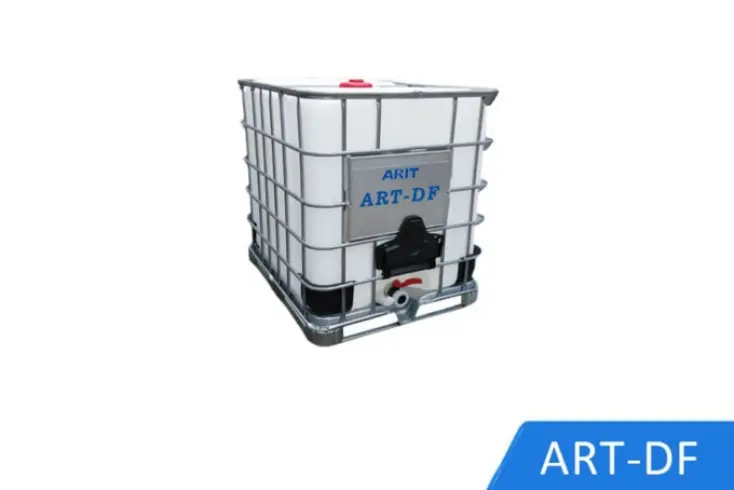
ARIT offers ART-VM as a vm concrete solution designed for fresh-concrete stability and rheological control.
According to ARIT's product information, ART-VM is a water-based polymer material that enhances concrete yield stress and improves workability and stability. The product is designed to regulate plastic viscosity and yield stress through solution viscosity and adsorption/entanglement effects.
ARIT also states that ART-VM can help address concrete segregation and bleeding, improve pumpability, and enhance the ability of cement paste to encapsulate aggregates.
The product specification lists ART-VM as a colorless transparent liquid with a solid content of 10 ± 0.5%, pH of 6.0 ± 1, and no stated alkali or chloride content.
For buyers evaluating an admixture company, these specifications can provide an initial basis for technical screening, but final performance should still be verified in the intended concrete system.

Concrete Flow Test
The usefulness of viscosity modifiers in concrete extends across multiple construction environments.
ARIT lists ART-VM for applications including pumped concrete, commercial concrete, precast concrete components, precast piles, subway shield tunnel segments, modular construction, and engineering concrete.
Pumped concrete must remain cohesive while moving through pipes and bends.
A VMA can help control the balance between flowability and cohesion, potentially reducing the risk of segregation during pumping.
Precast production often requires consistent fresh-concrete behavior because molds, reinforcement arrangements, and production cycles can vary significantly.
VMA technology can be useful when a mixture requires improved stability without simply increasing paste content.
Underground construction can involve complex reinforcement, restricted placement areas, and demanding production requirements.
A stable, workable mixture can help improve placement consistency and reduce the risk of segregation.
Modular construction relies heavily on repeatable manufacturing processes. Consistent concrete behavior can help manufacturers maintain predictable production quality across repeated casting operations.
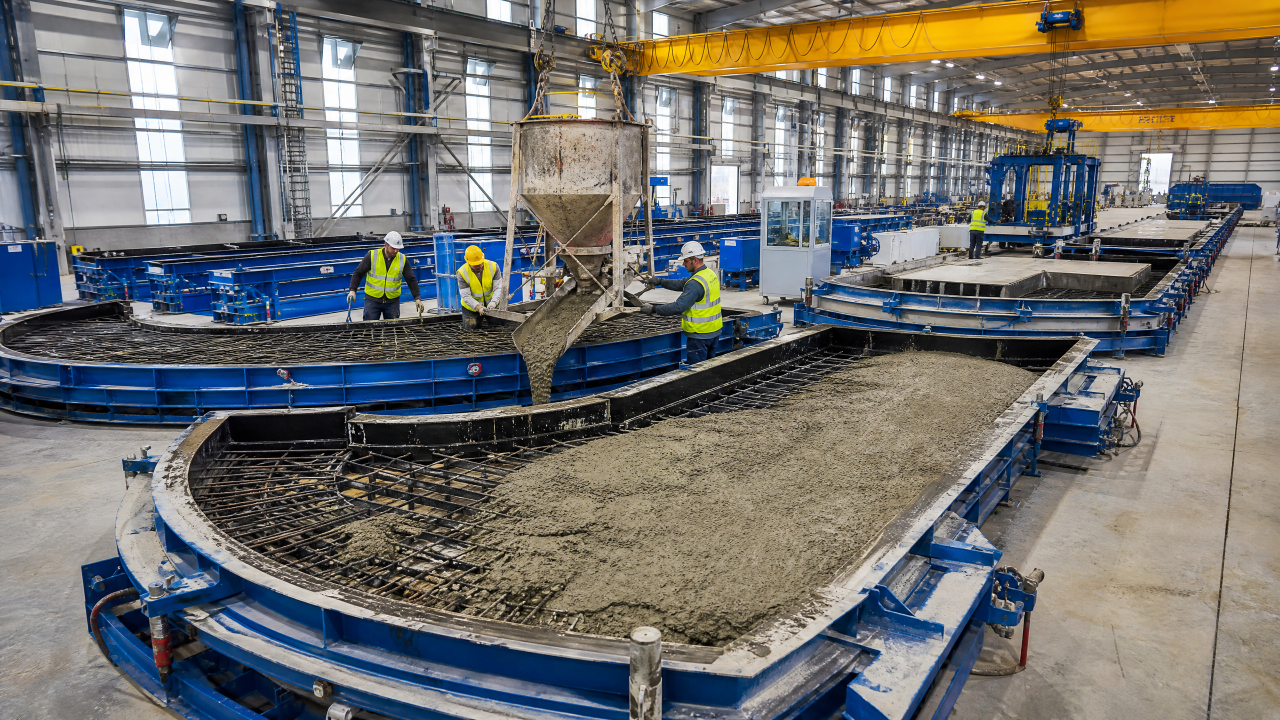
Modular Construction Concrete
When comparing concrete additives manufacturers, buyers should evaluate more than the viscosity level provided by an individual product.
The right VMA should support the desired concrete rheology without creating excessive stickiness, pumping resistance, delayed finishing, or undesirable interactions with other admixtures.
A practical evaluation can include the following:
Evaluation Area | What to Examine | Desired Result |
Stability | Aggregate suspension | Minimal segregation |
Bleeding | Free-water migration | Controlled bleeding |
Plastic viscosity | Resistance during flow | Appropriate pumping behavior |
Yield stress | Initial flow resistance | Stable but workable mixture |
Slump flow | Fresh-concrete mobility | Required flow retained |
Pumpability | Pipeline performance | Smooth and consistent pumping |
Compatibility | Interaction with other admixtures | Predictable behavior |
Dosage | Required VMA concentration | Efficient use without over-thickening |
This type of evaluation gives procurement teams a more practical framework for comparing concrete additives manufacturers.
A reliable concrete admixture company should be able to provide more than a product name and dosage recommendation.
Technical documentation is important, but application support is equally valuable.
Buyers should request technical data, specifications, safety documentation, recommended storage conditions, and application guidance.
Because VMA performance depends heavily on the concrete formulation, suppliers should be able to discuss compatibility with water reducers and other concrete components.
Batch-to-batch consistency is especially important for commercial concrete and precast production. Small changes in admixture performance can affect rheology and therefore influence pumping and placement.
An experienced admixture company should understand the difference between a mixture that needs more fluidity and one that needs better stability.
Adding more water is not always the solution. Increasing the dosage of a water reducer is not always the solution either. In some formulations, the more appropriate approach is to adjust viscosity and cohesion with a VMA.
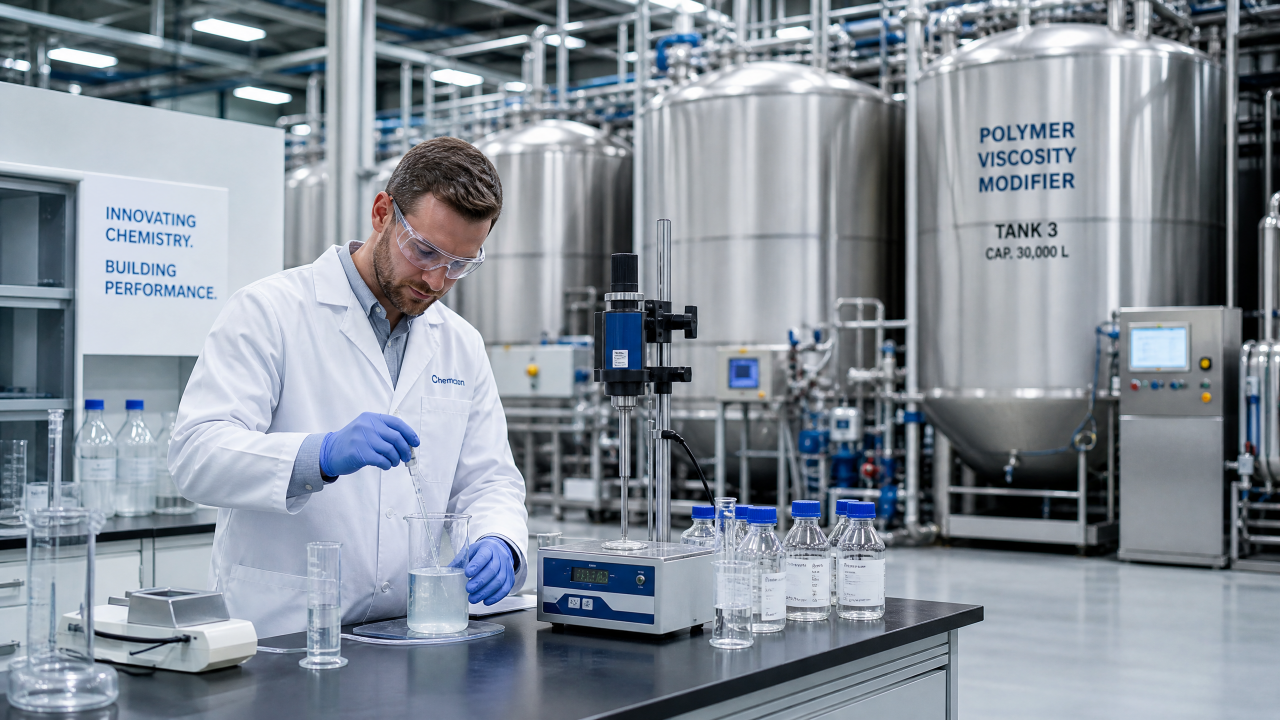
Formulation of Concrete Admixtures
VMA dosage should be determined through testing rather than treated as a fixed number for every concrete formulation.
A useful optimization process can involve:
1. Establish the target slump or slump flow.
2. Select the primary water-reducing admixture.
3. Evaluate initial concrete stability.
4. Introduce the VMA at controlled dosage levels.
5. Measure segregation, bleeding, flowability, and pumping behavior.
6. Compare results at different concrete temperatures and mixing conditions.
7. Select the dosage that provides the required stability without excessive viscosity.
This approach is particularly important because too little VMA may fail to control instability, while too much can make concrete unnecessarily viscous.
FHWA also cautions that VMAs can produce thixotropic behavior, meaning concrete may stiffen when stationary but become more fluid when disturbed.
Therefore, VMA optimization should consider both static and dynamic behavior.
ARIT approaches concrete admixtures through a broader formulation perspective rather than treating viscosity control as an isolated property.
Its ART-VM product is positioned for applications where concrete requires improved workability, stability, pumping performance, and aggregate encapsulation.
For buyers researching concrete admixture companies, this type of product can be relevant when the main challenge is not simply achieving a higher slump, but maintaining uniformity while the concrete remains highly workable.
The key is to select the VMA according to the complete mix design and validate its performance through actual materials and production conditions.
Viscosity Modifying Admixture play a specialized role in modern concrete technology. Instead of simply increasing fluidity, they help control cohesion, plastic viscosity, yield stress, segregation, and bleeding.
This makes a viscosity modifying Admixture particularly useful when concrete must remain highly workable while maintaining stability during transportation, pumping, and placement.
The interaction between VMAs and high-range water reducers is also important. A successful combination can provide a better balance between flowability and cohesion, but compatibility testing remains essential.
For ready-mix producers, precast manufacturers, infrastructure contractors, and other buyers evaluating concrete additives manufacturers, VMA selection should therefore focus on rheological performance, compatibility, dosage efficiency, quality consistency, and technical support.
ARIT's ART-VM provides one example of a water-based polymer VMA designed for these requirements, with applications extending from pumped and commercial concrete to precast components, tunnel segments, and engineering concrete.
Ultimately, the best VMA is not necessarily the product that produces the highest viscosity. It is the product that helps the concrete achieve the required combination of flowability, stability, pumpability, and uniformity.
Viscosity Modifying Admixture are used to improve the cohesion and stability of fresh concrete. They can help reduce segregation, settlement, and bleeding while modifying concrete rheology.
A viscosity modifying Admixture is a chemical admixture that changes the rheological properties of fresh concrete. It can increase cohesion and viscosity while helping maintain suitable workability.
No. They generally perform different functions. Water reducers primarily target water demand and workability, while VMAs primarily help control cohesion and stability. They can often be used together.
Viscosity modifiers in concrete are particularly useful for highly workable mixtures, pumped concrete, precast concrete, self-consolidating concrete, and other applications where segregation or bleeding needs to be controlled.
VM concrete generally refers to concrete incorporating a viscosity-modifying admixture or a concrete formulation in which viscosity modification is an important part of fresh-concrete performance.
When evaluating a concrete admixture company, consider product documentation, technical support, quality consistency, compatibility testing, production capability, and experience with your concrete application.
Yes. Excessive VMA can increase viscosity and may make concrete more difficult to pump or finish. FHWA notes that VMA-containing concrete can exhibit thixotropic behavior, so dosage optimization is important.
Notice: All images in this article are generated by Artificial Intelligence according to prompts.
 English
 tiếng việt
 العربية
 বাঙালি
 සිංහල
සිංහල