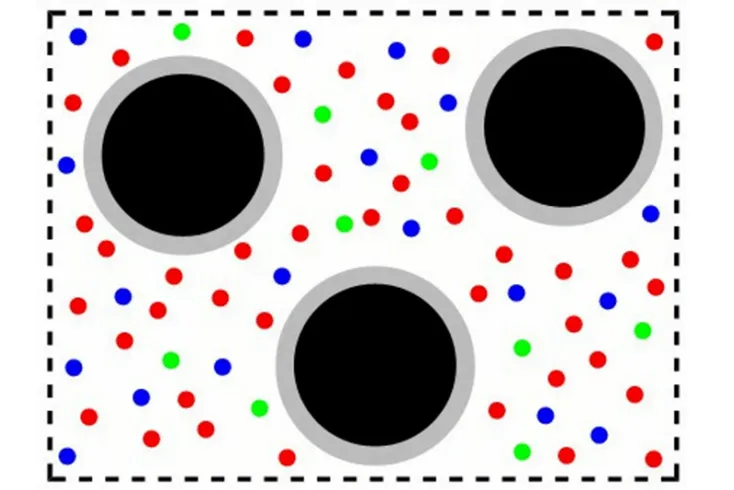
The answer to both common questions—Whether all mineral admixtures increase the workability of concrete and Whether all the admixtures decrease the slump of concrete mixtures—is no.
Concrete workability is influenced by particle size, shape, surface area, water demand, cement chemistry, admixture compatibility, temperature, and mixture proportions. Some mineral admixtures can improve flow, while others increase water demand and make concrete less workable. Likewise, chemical admixtures do not all reduce slump. Some are specifically designed to increase initial slump or maintain it for longer periods.
Understanding these differences is important when selecting water reducing agents in concrete, high-range water reducers, and supplementary cementitious materials for modern concrete formulations.
No. Mineral admixtures, often used as supplementary cementitious materials (SCMs), can have very different effects on fresh concrete.
The most important factors include particle shape, fineness, specific surface area, replacement level, chemical composition, and interaction with the other components.
FHWA research shows that fly ash can generally improve workability because its spherical particles act similarly to small “ball bearings” in the mixture. However, very fine materials such as silica fume can substantially increase water demand and reduce workability.
Fly ash is one of the mineral admixtures most commonly associated with improved fresh concrete workability.
Its generally spherical particles can reduce internal friction between particles and improve paste flow. FHWA notes that fly ash can reduce mixing-water requirements while improving the flow behavior of concrete.
Therefore, replacing part of Portland cement with appropriate fly ash may produce a smoother and more pumpable mixture at comparable water contents.
Silica fume behaves very differently.
Its particles are extremely fine and have a very high specific surface area. More water is therefore needed to coat the particles and maintain comparable flow. Without an appropriate High Performance Water Reducing Admixture, silica-fume concrete can become sticky and difficult to place.
FHWA specifically identifies silica fume as a mineral admixture that can increase water demand and reduce workability, while noting that superplasticizers can compensate for this effect.
The following comparison demonstrates why it is inaccurate to assume that every mineral admixture produces the same result.
Mineral Admixture | Typical Effect on Workability | Main Reason |
Fly ash | Often increases | Spherical particle shape and improved paste flow |
Slag cement | Often increases or has a neutral effect | Particle characteristics and reduced water demand in some mixes |
Silica fume | Often decreases | Extremely high fineness and surface area |
Metakaolin | Often decreases | High reactivity and fine particle size |
Calcined clay | Mix-dependent | Particle size, mineralogy and surface characteristics |
FHWA's guidance similarly shows that the effect of SCMs varies considerably: fly ash and slag generally tend to increase workability, while silica fume tends to decrease it.
This is why concrete producers should evaluate the complete mixture rather than judging an SCM only by its category.
No. In fact, many chemical admixtures are specifically designed to increase slump or maintain slump.
The question “what does water reducer do to concrete?” has a straightforward answer: a water reducer can increase workability at a given water content or achieve a required slump with less water.
A conventional concrete water reducing agent disperses cement particles, improving the efficiency of the mixing water. High-range products can create much greater increases in flow.
High range water reducers, commonly called superplasticizers, are designed to produce highly workable concrete without simply adding more water.
ASTM C494/C494M classifies Type F as a high-range water-reducing admixture and Type G as a high-range water-reducing and retarding admixture. The standard also emphasizes that admixture performance can vary depending on cement, pozzolan, aggregates, mixture proportions, and batching conditions.
Therefore, a superplasticizer does not inherently decrease slump. At the right dosage and under suitable conditions, it can significantly increase initial slump.
Although a water reducer may increase initial workability, the concrete can still experience slump loss over time.
This is particularly important when high range water reducers are used.
ASTM notes that mixtures receiving high-range water reduction can show a higher rate of slump loss. When high-range admixtures are used to create flowing concrete, the increased workability may be temporary depending on the materials and conditions.
This explains the difference between initial slump and slump retention in concrete.
Initial slump describes concrete consistency shortly after mixing, while slump retention describes how well that consistency is maintained over time.
A concrete mixture can have:
High initial slump but poor retention
Moderate initial slump with excellent retention
Low initial slump that increases after admixture addition
Stable slump throughout transportation and placement
For ready-mix concrete, the last two characteristics can be particularly important when transportation time is long.
Slump behavior is not controlled by admixture chemistry alone.
Important factors include:
Cement mineral composition
SCM type and replacement level
Admixture molecular structure
Concrete temperature
Mixing sequence
Transportation time
Water-to-cementitious-material ratio
Aggregate moisture and absorption
For example, the polycarboxylate ether structure of a PCE-based admixture strongly influences how it interacts with cement particles. Different molecular architectures can provide different levels of initial dispersion and retention.
So, what is polycarboxylate in concrete technology?
Polycarboxylate-based polymers are modern water-reducing chemistries used in high-performance concrete. Their molecular structures can be engineered to provide strong particle dispersion and, depending on the formulation, extended workability.
This is why superplasticizer uses have expanded beyond simply producing high initial slump. Modern PCE products can be designed for applications where both flow and retention time of concrete are important.
Not automatically.
The question “does superplasticizer increase compressive strength?” needs to be answered in terms of the overall mixture.
A superplasticizer can enable the use of a lower water to cementitious material ratio while maintaining workable concrete. A lower ratio can contribute to higher potential strength when the concrete is properly proportioned, placed, and cured.
The admixture itself should therefore not be viewed as a direct “strength additive.” Its value is often in allowing the mixture designer to achieve a more favorable water-to-binder ratio while retaining the required workability.
A professional concrete admixture company should evaluate admixture performance against the actual concrete system.
Requirement | Potential Solution | Key Evaluation |
Higher initial flow | HRWR / superplasticizer | Initial slump |
Long transportation | Slump-retention PCE | Slump after time |
High silica-fume content | PCE + optimized mix | Water demand |
Improved pumpability | Fly ash or suitable water reducer | Rheology |
Low water-to-binder ratio | High-range water reducer | Flow and strength |
Stable fresh concrete | Compatible admixture system | Segregation and bleeding |
ARIT focuses on concrete admixture technologies that address different performance requirements rather than assuming one formulation works for every cementitious system. For producers evaluating a cement water reducing agent or PCE-based product, compatibility trials with the intended cement and SCMs remain essential.
No. Fly ash often improves workability, while silica fume and some highly fine or reactive SCMs can increase water demand and reduce workability.
No. Water reducers and superplasticizers are often used to increase initial slump. Other admixtures may have little direct effect on slump or may influence slump retention instead.
A water reducer disperses cement particles so that the required workability can be achieved with less mixing water or greater flow can be achieved at the same water content.
Slump retention describes the ability of fresh concrete to maintain its desired consistency over time after mixing. It is particularly important when concrete must be transported or placed over an extended period.
Superplasticizers are used to produce high-flow concrete, reduce water demand, support low water-to-cementitious-material ratios, improve pumpability, and facilitate high-performance or highly flowable concrete.
Neither mineral admixtures nor chemical admixtures have one universal effect on concrete workability.
Fly ash may improve flow because of its particle shape, while silica fume can increase water demand because of its extreme fineness. Similarly, a water-reducing admixture may increase initial slump, yet some high-range water-reducing systems can experience significant slump loss if their chemistry is not matched to the cementitious materials.
For this reason, concrete performance should be evaluated as a complete system. Selecting the right PCE chemistry, SCM combination, and water-reducing strategy can help balance initial workability, slump retention in concrete, strength development, and placement requirements.
 English
 tiếng việt
 العربية
 বাঙালি
 සිංහල
සිංහල