Name
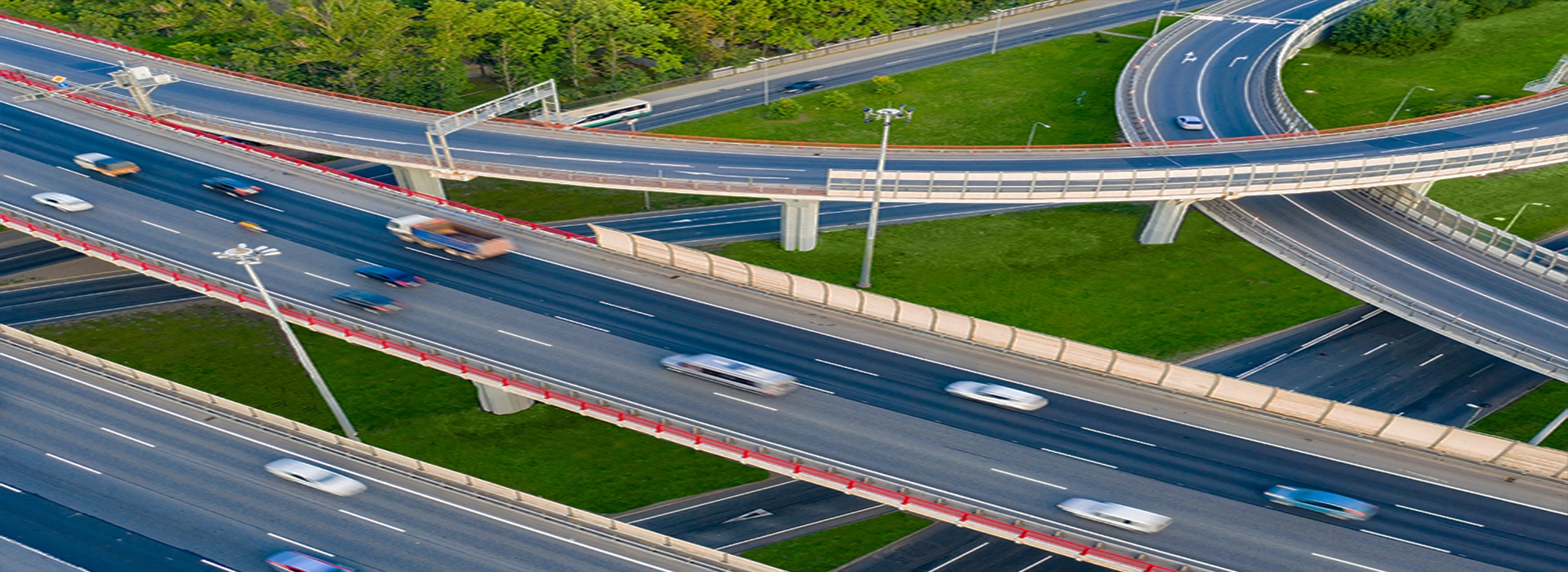
Yongtaiwen Expressway Project
The Wenzhou section of the reconstruction and expansion project of Yongtaiwen Expressway is divided into four bid sections, namely the North Baixiang–South Baixiang Section, the Hulingling Tunnel Section, the Huwu Town–Nantang Hub Section, and the Yueqing Hub–North Baixiang Section, as well as the South Baixiang of Wenzhou–Zhejiang-Fujian Border Section.
The North Baixiang–South Baixiang Section starts at the north interchange of Wenzhou Bridge on Shenhai Expressway, passes through Yueqing City, Yongjia County, Lucheng District, Longwan District and Ouhai District, and terminates at the north side of Nanbaixiang Hub in Chashan Subdistrict, Ouhai District, with a total route length of approximately 15 kilometers. The project is scheduled to have a construction period of 48 months and a budgeted investment of about RMB 6.59 billion. It will be equipped with 4 interchanges, 3 interchange toll stations, and 1 newly-built service area (co-constructed with Qidu Interchange).
The entire line will be reconstructed and expanded in accordance with the standard of an eight-lane expressway with a design speed of 100 kilometers per hour and an integral subgrade width of 41 meters. For the north interchange section of Wenzhou Bridge, three new lanes will be separately constructed on both sides, forming a ten-lane cross-section layout of "3+2+2+3" together with the existing expressway.
The North Baixiang–South Baixiang Section of the reconstruction and expansion project of Yongtaiwen Expressway has been listed as a key construction project in the 14th Five-Year Plan for Comprehensive Transportation Development of Zhejiang Province. The construction of this project will improve the traffic capacity, service level and road network support capacity of Yongtaiwen Expressway, facilitate Wenzhou’s accelerated development of a modern comprehensive transportation system, and carry profound significance for building a national comprehensive transport hub city and fulfilling the pilot tasks of building a powerful transportation country with high quality.
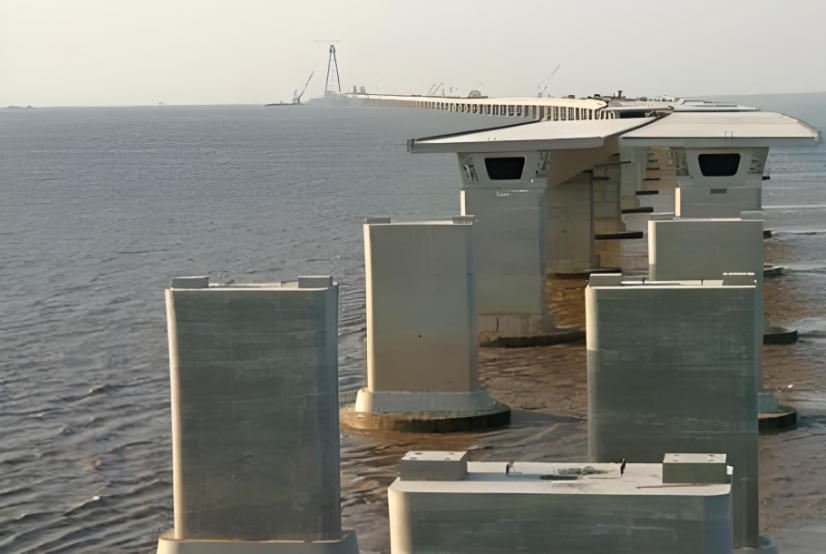
Figure1 Construction Procedures
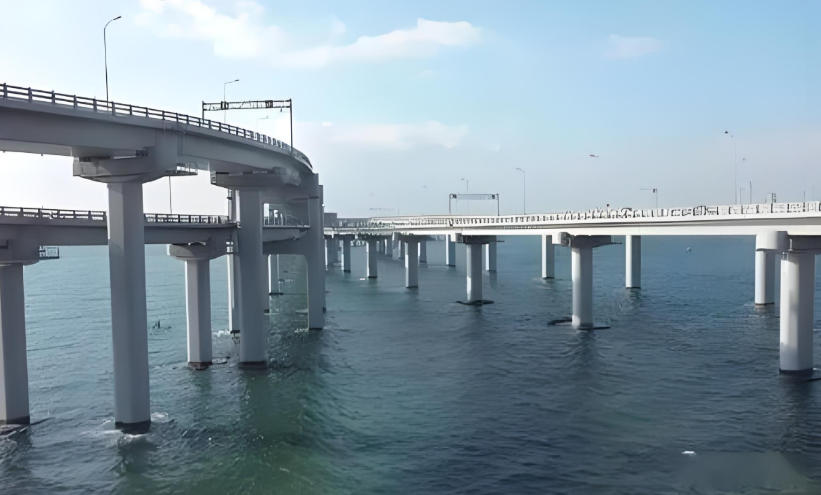
Figure 2 Completed On-site Photos
The core difficulty in the construction of marine engineering concrete lies in resisting the harsh marine environment to guarantee long-term structural durability. The most severe challenge is steel bar corrosion induced by chloride ion penetration, which constitutes the most fatal destructive factor. Meanwhile, the concrete is subjected to superimposed physical and chemical damages including sulfate chemical corrosion, wave erosion, dry-wet cycles and freeze-thaw action.
To address the above hazards, the concrete must feature extremely high compactness, which can be achieved via a low water-binder ratio and high-volume mineral admixtures to deliver superior impermeability. However, such measures impose substantial challenges on the workability and crack control of concrete. During construction, precise control over the thickness of concrete cover for steel reinforcement, adequate vibration of complex structural members to avoid construction defects, and effective mitigation of thermal cracks and plastic shrinkage cracks in mass concrete are all critical factors for quality assurance.
Furthermore, pouring, vibration operations under harsh offshore conditions and long-term sufficient moist curing pose major practical difficulties in on-site implementation. In summary, the construction of marine engineering concrete represents a systematic project requiring close integration of material performance optimization and refined construction technologies.
Given the severe service environment of marine engineering concrete, durability shall be prioritized in concrete mix design to extend the service life of marine structures, which is generally realized by increasing the dosage of mineral admixtures and reducing the water-binder ratio.
Based on the aforementioned practical engineering case, Grade 52.5 cement is adopted with a dosage ranging from 40% to 55%, fly ash accounts for approximately 25% of the total binder materials, and ground granulated blast furnace slag (GGBS) makes up around 30%. The water-binder ratio is roughly 0.01 to 0.02 lower than that of ordinary concrete.
To protect internal steel bars against chloride ion erosion, prevent steel corrosion and secure the durability and safety of marine engineering structures, a corrosion inhibitor is normally incorporated into the mix proportion at a dosage of approximately 6% of the total binder materials.
As ground granulated blast furnace slag is incorporated into marine concrete at a dosage of about 30% or even higher, the selected mother liquor shall deliver rapid dispersion and excellent viscosity reduction performance.
ART-M611C, ART-M15 and ART-M22
For detailed remixing formula, feel free to contact the technicians at ARIT.
Address
22 Huixin Road, Nanjing, China
Call us
Email us
Connect with ARIT for Premium Concrete Additives Wholesale
 English
 tiếng việt
 العربية
 বাঙালি
 සිංහල
සිංහල